
A toothache might seem like a minor inconvenience, but left untreated, it can escalate into a serious — even life-threatening — health crisis. A dental abscess, which is a pocket of infection at the root of a tooth or in the surrounding gum tissue, can spread bacteria into the jaw, neck, and beyond if not addressed promptly.
Knowing the warning signs your tooth infection has spread could literally save your life. If you’re experiencing sudden worsening symptoms, the first step is to contact an emergency dentist in Plano as soon as possible.
What Is a Tooth Infection?
A tooth infection, or dental abscess, occurs when bacteria invade the pulp of a tooth — the soft inner tissue containing nerves and blood vessels. This typically happens as a result of:
- An untreated or deep cavity
- A cracked or broken tooth that allows bacteria to enter
- A failed or damaged filling
- Advanced gum disease
Once bacteria take hold, they multiply rapidly and form a pocket of pus. Without intervention, the infection does not stay localised — it can travel through the tissue, bone, and bloodstream to other parts of the body.
Early Signs of a Tooth Infection
Catching an infection early is the key to fast, less invasive treatment. Common early signs include:
- Persistent, throbbing toothache — especially pain that radiates to your jaw or ear
- Increased sensitivity to hot or cold temperatures
- Mild swelling around the affected tooth or gum
- A bad taste in your mouth, often caused by pus draining from the abscess
- Redness and tenderness in the gums near the tooth
If you notice any of these symptoms, don’t wait. Early dental treatment — such as a root canal — can resolve the infection before it has a chance to spread.
Warning Signs Your Tooth Infection Has Spread
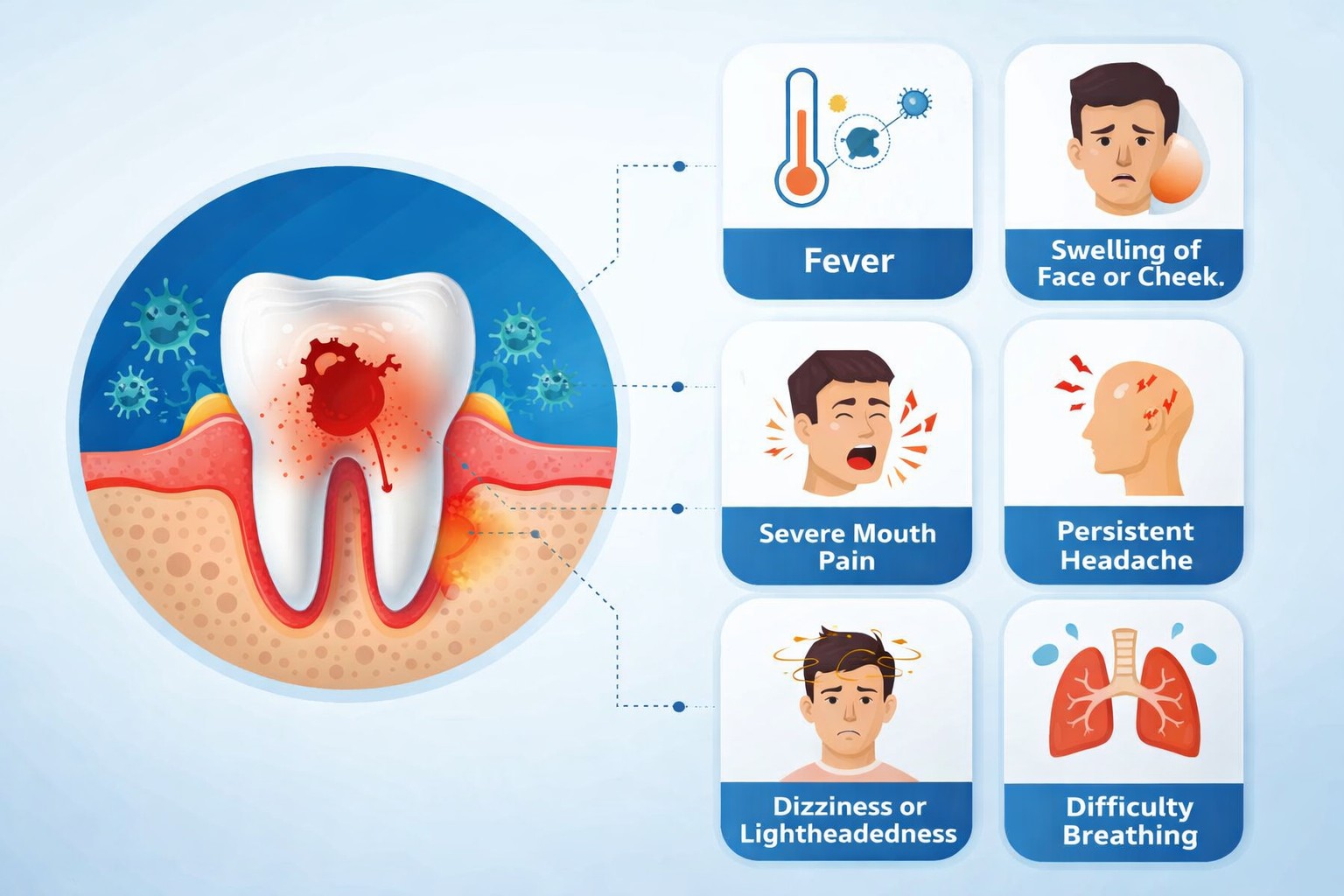
The following are the most critical signs your tooth infection is spreading. These tooth infection spreading symptoms require urgent dental or medical attention — do not delay.
1. Facial Swelling
Swelling that extends beyond the gum line — particularly affecting your cheek, jaw, or the area beneath your eye — is a strong indicator that the infection is no longer contained. Facial swelling can progress rapidly and become disfiguring or dangerous within hours.
2. Jaw Pain and Pressure
If you experience intense jaw pain and pressure — especially a stiff or locked jaw — bacteria may have reached the deeper structures of your face. This symptom, known as trismus, is a hallmark of spreading dental infection and demands same-day evaluation.
3. Fever and Chills
A fever signals that your immune system is fighting a systemic infection. If your tooth pain is accompanied by a temperature above 101°F, sweating, or chills, the bacteria have likely entered your bloodstream — a condition known as septicaemia that can be life-threatening if untreated.
4. Swollen Lymph Nodes
Swollen lymph nodes under the jaw or in the neck are your body’s immune response to infection nearby. Tender, enlarged nodes in this area alongside dental pain are a reliable symptom of a spreading tooth infection and should not be dismissed.
5. Pus Drainage
If you notice pus draining from around a tooth or a bump on your gum that oozes when pressed, the abscess has found a path to release. While this may temporarily reduce pain, it does not mean the infection is resolving — it is still present and spreading.
6. Difficulty Swallowing or Breathing — A Medical Emergency
This is the most severe of all symptoms of a spreading tooth infection. If you have difficulty swallowing, breathing, or opening your mouth, call 911 immediately. These symptoms indicate Ludwig’s angina or a deep neck abscess — both of which are potentially fatal without emergency intervention.
How to Know If a Tooth Infection Has Spread
Beyond the visible symptoms above, here is how to know if a tooth infection has spread deeper into your body:
- Infection in the jawbone (osteomyelitis): Deep, persistent jaw pain that does not respond to over-the-counter pain relief, along with bone tenderness, may indicate the infection has reached the bone.
- Spread to the sinuses: If you have sinus pressure, congestion on one side, or a foul taste in your nasal passage, the infection from an upper tooth may have entered your sinus cavity.
- Systemic symptoms: Fatigue, nausea, headache, and general unwellness alongside dental pain can indicate the infection has entered the bloodstream.
- Visible swelling moving downward: Any swelling that appears to be moving toward your neck or chest is a critical emergency.
None of these situations should be managed with antibiotics alone or a ‘wait and see’ approach. Seek care from an emergency dentist in Plano the moment these symptoms appear.
Treatment Options for a Spreading Tooth Infection
The right treatment depends on how far the infection has progressed. At Pinnacle Dental, our team will diagnose and treat the infection using the most appropriate, minimally invasive approach available.
Root Canal Treatment
For infections still contained within the tooth, a root canal procedure is the good dental treatment. The infected pulp is removed, the root canals are cleaned and disinfected, and the tooth is sealed, saving the natural tooth while eliminating the source of infection.
Drainage of the Abscess
If a pocket of pus has formed, it must be drained to relieve pressure, reduce pain, and prevent further spread. This is typically performed as part of emergency dental care alongside antibiotic therapy. After treatment, following proper dental care tips is essential to support healing — including maintaining gentle oral hygiene, rinsing with warm salt water if recommended, avoiding hard or very hot foods, and completing the full course of prescribed antibiotics. Keeping the area clean and attending follow-up visits can help prevent the infection from returning and protect your overall oral health.
Antibiotic Therapy
Antibiotics are prescribed to control bacterial spread — particularly when the infection shows signs of moving beyond the tooth. However, antibiotics treat the symptoms, not the source; dental treatment is always required alongside them.
Tooth Extraction
When a tooth cannot be saved due to severe infection or structural damage, extraction removes the source of infection entirely. This is always followed by a discussion of tooth replacement options such as implants or bridges.
If you’re experiencing any of these symptoms, please contact our emergency dentist in Plano right away. Early action means simpler treatment, faster recovery, and better outcomes.
When to Seek Immediate Emergency Dental Care
Go directly to an emergency dentist in Plano — or call 911 — if you experience any of the following:
- Fever above 101°F combined with tooth or jaw pain
- Rapidly increasing facial or neck swelling
- Difficulty opening your mouth or swallowing
- Shortness of breath or difficulty breathing
- A feeling of general unwellness, extreme fatigue, or confusion
- Pus visibly draining from the gum or jaw area
- Pain that has suddenly stopped after being severe (can indicate the nerve has died — the infection remains)
Suffering from a tooth infection? Contact Pinnacle Dental
A tooth infection that goes untreated can escalate from a manageable dental problem to a medical emergency in a matter of days. The warning signs your tooth infection has spread from facial swelling and fever to difficulty breathing — are your body’s urgent plea for help.
Contact Pinnacle Dental today to schedule emergency dental care in Plano. Our experienced team is ready to diagnose, treat, and protect your health — before the infection spreads any further. Schedule an appointment by calling 971-801-2788.
FAQs About Warning Signs About Tooth Infection
Can a tooth infection spread to the brain?
Yes, in rare but serious cases, a dental abscess can spread to the brain, causing a cerebral abscess. This is why severe dental infections must be treated urgently. Symptoms such as severe headache, confusion, vision changes, or neck stiffness alongside dental pain require immediate emergency care.
How quickly can a tooth infection spread?
A tooth infection can begin spreading to surrounding tissue within days of onset, and in some cases, systemic symptoms like fever can appear within 24–48 hours. The speed of spread depends on the individual’s immune response, the severity of the infection, and whether treatment is sought early.
What does it feel like when a tooth infection starts to spread?
You may notice increasing jaw pain and pressure, swelling that extends beyond the tooth, a persistent bad taste in your mouth, difficulty chewing or opening your mouth fully, and the onset of fever or chills. Any worsening of symptoms beyond localised tooth pain is a warning sign.
Will antibiotics alone cure a spreading tooth infection?
No. Antibiotics can help control the spread of bacteria and reduce systemic symptoms, but they cannot eliminate the source of the infection inside the tooth. A root canal, abscess drainage, or extraction is always required to fully resolve a dental abscess.
When should I go to the ER instead of a dentist for a tooth infection?
Go to the emergency room immediately if you have difficulty breathing, difficulty swallowing, severe swelling of the neck or face, high fever, or signs of confusion or extreme fatigue. These may indicate a life-threatening infection. For all other dental infection symptoms, contact an emergency dentist in Plano for same-day care.