
Losing one or more teeth can feel overwhelming — not just because of the way it affects your appearance, but because of how much it impacts your ability to eat, speak, and feel confident every day. The good news is that modern dentistry offers excellent solutions. The two most popular? Dentures and dental implants. But which one is really better for the long haul?
This guide breaks down both options in plain language so you can make an informed decision that fits your health, lifestyle, and budget. Whether you’re weighing your options for the first time or reconsidering a choice you made years ago, you’ll find the answers here.
Understanding Your Options: What Are Dentures and Implants?
What Are Dentures?
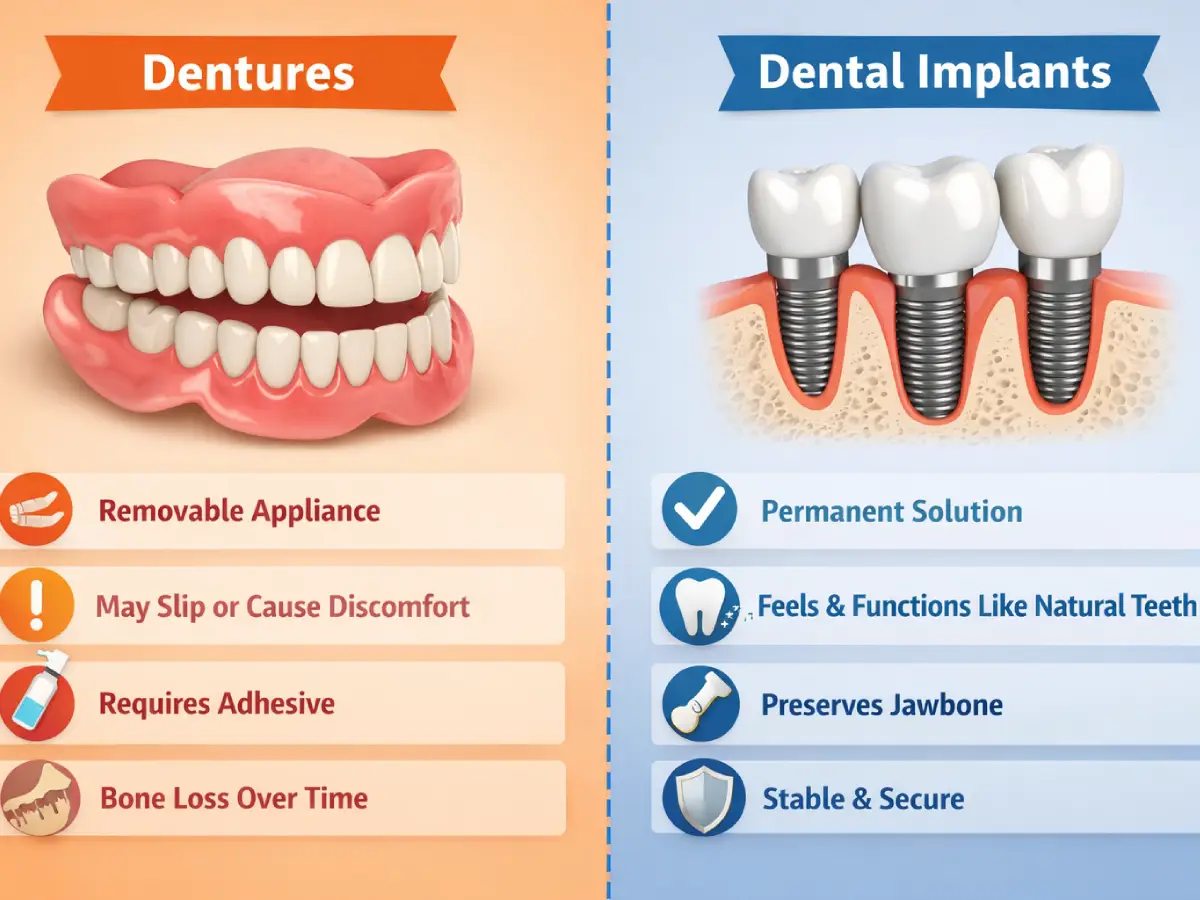
Dentures are removable prosthetic devices designed to replace missing teeth and surrounding tissue. They come in two main varieties: complete dentures, which replace a full arch of teeth, and partial dentures, which fill in gaps when some natural teeth remain. They rest on the gums and are typically held in place with adhesive or natural suction.
Dentures have been used for centuries, and today’s versions are far more natural-looking and comfortable than older styles. They’re a common choice for patients who need an affordable, non-surgical solution.
What Are Dental Implants?
Dental implants are titanium posts that are surgically placed into the jawbone to serve as artificial tooth roots. Once the implant fuses with the bone (a process called osseointegration), a custom crown is attached on top, creating a replacement tooth that looks, feels, and functions like the real thing. Implants can replace a single tooth, multiple teeth, or even a full arch through procedures like All-on-4.
They’re considered the gold standard in permanent tooth replacement because of their durability, stability, and bone-preserving benefits.
Side-by-Side Comparison: Dentures vs. Dental Implants
| Factor | Dentures | Dental Implants |
|---|---|---|
| Longevity | 5–10 years (may need relining or replacement) | 20+ years to a lifetime with proper care |
| Appearance | Natural-looking, but may slip or shift | Looks and feels like natural teeth |
| Comfort | May cause soreness, especially at first | Feels like a natural part of your mouth |
| Bone Preservation | No — bone loss continues over time | Yes — stimulates the jawbone |
| Maintenance | Removed nightly, soaked, cleaned separately | Brushed and flossed just like natural teeth |
| Eating Restrictions | Avoid hard, sticky, or chewy foods | No restrictions — eat what you love |
| Upfront Cost | Lower initial cost | Higher upfront investment |
| Long-Term Cost | Ongoing costs for relining, adhesives, replacements | Often more cost-effective over time |
| Surgery Required | No | Yes — minor oral surgery |
Long-Term Durability: Which Lasts Longer?
When people ask about the long-term value of tooth replacement, durability is usually the first concern. Here’s the honest comparison:
Dentures typically last between 5 and 10 years before they need relining or full replacement. As the jawbone changes shape over time (a process called bone resorption), the fit of your dentures can become loose and uncomfortable. This means ongoing appointments and ongoing costs.
Dental implants, by contrast, are designed to be a lifelong solution. The titanium post that anchors the implant fuses directly with your jawbone and can last decades — often a lifetime — with proper care. The crown on top may eventually need replacement after 15–20 years, but the implant itself typically stays put.
💡 The Bottom Line on DurabilityIf you’re thinking long-term, dental implants are the more durable investment. While the upfront cost is higher, many patients find they spend less overall when they factor in denture replacements, adhesives, and adjustments over the years. Our team at Pinnacle Dental can help you calculate what makes the most sense for your specific situation.
Comfort and Quality of Life
One of the most underrated factors in this comparison is day-to-day quality of life. Dentures can cause a range of comfort issues, particularly when they’re new:
- Soreness and irritation along the gum line
- Slipping or clicking while eating or speaking
- The need for adhesive creams to keep them in place
- Removing them every night for soaking and cleaning
Many denture wearers adjust over time, but the reality is that most patients report significantly higher satisfaction with implants. Because implants become a fixed part of your jaw, there’s no slipping, no adhesive, and no nightly removal routine. You simply brush and floss as you normally would.
Patients who undergo tooth replacement with implants also frequently report improved confidence in social situations — no worrying about dentures moving when you laugh, speak, or eat your favorite meal.
Bone Health: A Critical Long-Term Factor
Here’s something many people don’t realize: when you lose a tooth, the jawbone beneath it begins to shrink. This process — called bone resorption — happens because the tooth root is no longer there to stimulate the bone. Dentures sit on top of the gums and do nothing to stop this process. Over time, bone loss can actually change the shape of your face, making you appear older.
Dental implants are the only tooth replacement option that actively prevents bone loss. The titanium post mimics the function of a natural tooth root, stimulating the bone every time you bite or chew. This preserves the integrity of your jawbone and maintains your facial structure for years to come.
For patients concerned about long-term facial appearance and bone health, this is often the deciding factor.
✦ Implants — Advantages
- Permanent, stable solution
- Preserves jawbone and facial structure
- No dietary restrictions
- Looks and feels completely natural
- Easy maintenance — brush and floss normally
- High long-term value
✦ Dentures — Considerations
- Requires nightly removal and soaking
- Can slip or become loose over time
- Does not prevent bone loss
- May restrict certain foods
- Needs periodic relining or replacement
- Ongoing adhesive costs
Cost Comparison: Short-Term vs. Long-Term Thinking
Cost is one of the biggest reasons people initially choose dentures. Dentures generally have a lower upfront price tag, making them more accessible for patients who need an immediate, budget-friendly solution. However, it’s important to think beyond the first appointment.
Over 10–15 years, the costs associated with dentures — replacements, relining, adhesives, and adjustment visits — can add up significantly. Dental implants require a larger initial investment, but because they’re built to last a lifetime, many patients actually save money in the long run.
Additionally, implants can help avoid other costly dental issues. By preventing bone loss, they may reduce the need for future dental bridge treatments or other restorative procedures that become necessary when bone deteriorates.
It’s also worth noting that dental insurance coverage varies widely for both options, and financing plans are often available. At Pinnacle Dental, we accept all PPO insurance plans and offer membership plans for patients without insurance, making implant treatment more accessible than many people expect. Contact us to learn about your financing options.
Who Is a Good Candidate for Each Option?
Dentures May Be Right for You If…
- You need an immediate, budget-friendly solution
- You are missing most or all of your teeth
- Certain health conditions make surgery inadvisable
- You have significant bone loss that would require extensive grafting
- You prefer a non-surgical approach
Dental Implants May Be Right for You If…
- You want a permanent, natural-feeling solution
- You are in good overall health and have adequate bone density
- You are missing one or several teeth (not necessarily all)
- You want to prevent jawbone deterioration
- You’re looking for the best long-term investment in your smile
🦷 Not Sure Which Is Right for You?The best way to know for certain is to schedule a consultation with an experienced dentist. Our team at Pinnacle Dental will evaluate your bone density, overall health, and goals to recommend the most appropriate solution. We also offer sedation dentistry options for patients who feel anxious about dental procedures.
What About Implant-Supported Dentures?
There’s actually a middle-ground option that combines the affordability of dentures with the stability of implants: implant-supported dentures. Also known as snap-on dentures or All-on-4 implants, these use a small number of implant posts to anchor a full set of prosthetic teeth securely in place.
Implant-supported dentures don’t slip, provide better chewing function than traditional dentures, and still help stimulate the jawbone. They’re an excellent option for patients who need a full-arch restoration but want the security of implants without replacing every single tooth individually.
Pinnacle Dental offers All-on-4 dental implants as part of our comprehensive implant services — a full arch replacement using just four strategic implant posts. This approach is more affordable than individual implants for every tooth, while delivering exceptional stability and a natural appearance.
The Verdict: Which Is Better Long-Term?
For most patients who are medically eligible, dental implants offer a clearly superior long-term outcome. They last longer, feel more natural, protect your jawbone, and ultimately provide a higher quality of life. The higher initial cost is offset by the fact that implants rarely need replacement and eliminate many of the ongoing costs associated with dentures.
That said, dentures remain a valuable and practical solution for many people — particularly those seeking a non-surgical option, those with significant existing bone loss, or those who need an affordable immediate solution while planning for implants in the future.
The right answer truly depends on your individual health, goals, and financial situation. What’s most important is that you replace missing teeth promptly — because leaving gaps untreated leads to bone loss, shifting teeth, bite problems, and a host of other oral health complications. Learn more about how our experienced dental team approaches comprehensive oral health care for patients of all ages.
If you’d like to explore your cosmetic and restorative options further, our cosmetic dentistry services can also complement your tooth replacement treatment for a complete, beautiful smile transformation.
Frequently Asked Questions
Q How long do dental implants last compared to dentures?
Dental implants can last 20 years or more — and in many cases, a lifetime — with proper care. The titanium post fuses with the jawbone and rarely needs replacement. The crown attached to the implant may need to be replaced after 15–20 years. Traditional dentures, by comparison, typically need to be relined or fully replaced every 5–10 years as the shape of your jaw changes over time.
Q Are dental implants painful?
The implant procedure is performed under local anesthesia, so patients feel little to no pain during surgery. Post-operative soreness is common but typically manageable with over-the-counter pain relievers and usually subsides within a few days. Most patients are surprised at how comfortable the process is. For patients with dental anxiety, sedation options are available to make the experience as stress-free as possible.
Q Can I switch from dentures to dental implants later?
Yes, in many cases you can transition from dentures to implants. However, the longer you wear dentures, the more bone loss you may experience — and significant bone loss can require bone grafting before implants can be placed. The sooner you explore implants, the more straightforward the process tends to be. A dental evaluation will determine whether you’re a candidate.
Q Do dental implants look natural?
Absolutely. Dental implants are custom-designed to match the color, shape, and size of your surrounding natural teeth. Because they’re anchored in the jawbone just like real tooth roots, they sit at the gum line naturally and blend in seamlessly. Most people cannot tell the difference between an implant and a natural tooth — including you.
Q Does insurance cover dental implants or dentures?
Coverage varies significantly by insurance plan. Many PPO dental plans offer partial coverage for both dentures and implants, though implant coverage has historically been less common. At Pinnacle Dental, we accept all PPO insurance plans and also offer an in-house annual membership plan (starting at $300) for patients without insurance. We recommend calling our office so we can review your specific benefits and discuss financing options.
Q What is an All-on-4 dental implant?
All-on-4 is a full-arch dental implant solution that uses just four strategically placed implant posts to support a complete set of prosthetic teeth. It’s an excellent alternative to traditional dentures for patients who have lost most or all of their teeth. All-on-4 provides the stability and bone-stimulating benefits of individual implants at a more affordable total cost, and can often be completed without bone grafting.
Q How do I care for dental implants?
Caring for implants is straightforward — brush twice daily with a soft-bristle toothbrush, floss daily (or use a water flosser around the implant), and attend regular dental checkups. There’s no need to remove them, soak them, or use adhesives. With good oral hygiene habits, your implants can last a lifetime.