
If you’ve been thinking about straightening your teeth, there’s a good chance you’ve already come across two popular options: Invisalign and ceramic braces. Both are designed with aesthetics in mind, and both can deliver excellent results — but they work in very different ways, and the right choice really depends on your lifestyle, your bite, and what matters most to you day to day.
For patients in Plano looking for a more discreet path to a straighter smile, this guide walks through the key differences so you can walk into your consultation feeling informed.
What Makes an Orthodontic Option “Discreet”?
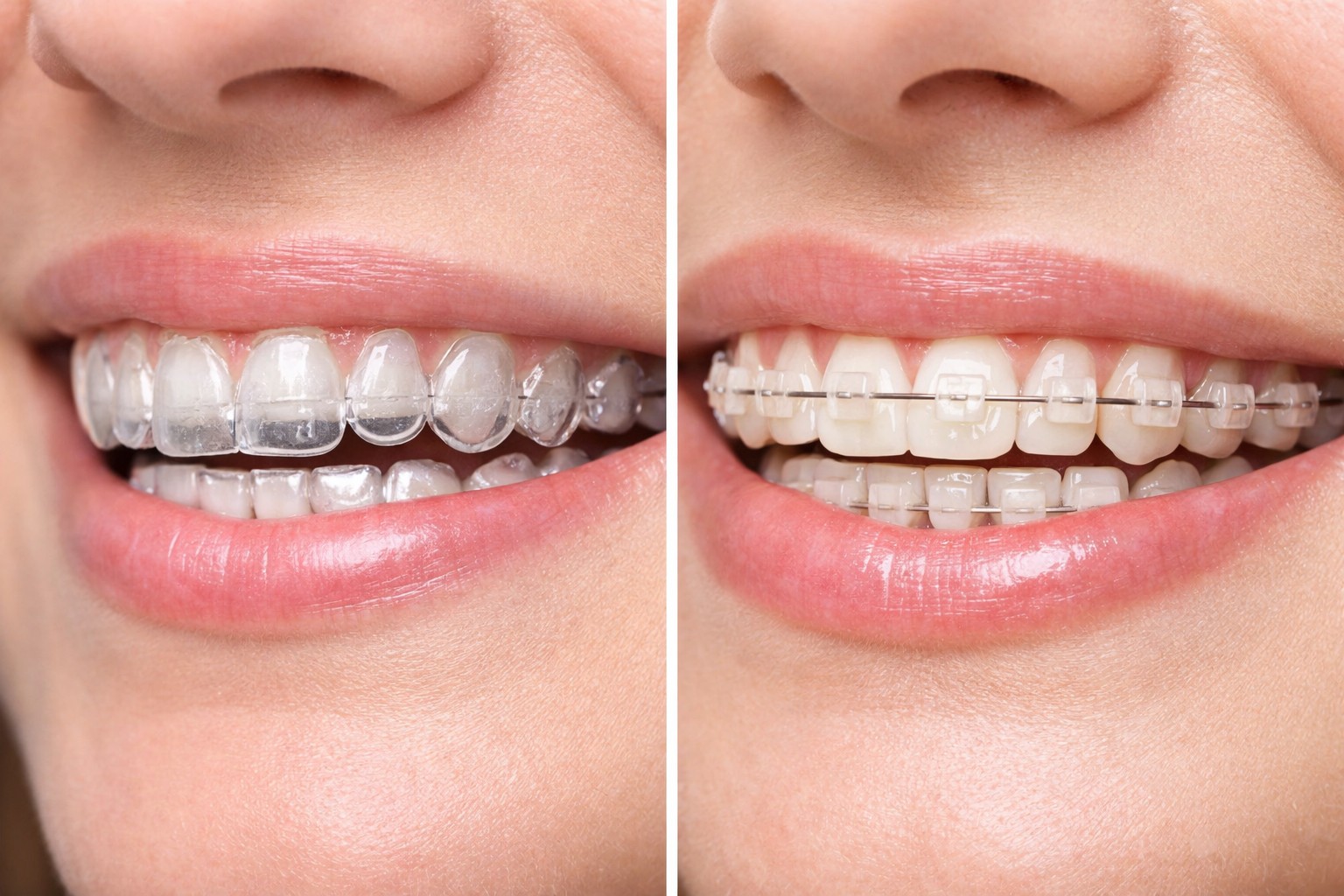
When most people say they want something discreet, they mean they don’t want their orthodontic treatment to be the first thing people notice. Both Invisalign and ceramic braces address this in different ways — but neither is truly invisible up close. Understanding the distinction matters before making your decision.
Invisalign treatment uses a series of clear, removable plastic aligners custom-fitted to your teeth. Ceramic braces, on the other hand, use the same bracket-and-wire system as traditional metal braces, but the brackets are made from tooth-colored or clear ceramic material that blends with your enamel.
Invisalign: Clear Aligners and Lifestyle Flexibility
Invisalign aligners are made from a smooth, BPA-free plastic that sits snugly over your teeth. When worn correctly, they’re difficult to notice in most social and professional settings. There are no wires, no brackets, and no metal hardware involved.
That said, Invisalign isn’t completely invisible. Small tooth-colored attachments are sometimes bonded to the teeth to help the aligners grip and move teeth more precisely. These attachments can be visible if someone looks closely.
Day-to-Day Experience
One of the biggest advantages of Invisalign treatment is that the aligners come out. You remove them to eat, drink anything other than water, brush, and floss. This makes oral hygiene much easier to maintain throughout treatment. It also means you can eat whatever you want without worrying about breaking a bracket.
The trade-off is discipline. Aligners need to be worn for 20 to 22 hours per day to stay on track. If you have a habit of leaving them out longer than recommended — during meals, at social events, or simply forgetting to put them back in — your treatment timeline can stretch.
Ceramic Braces: Subtle but Fixed
Ceramic braces use brackets made from composite material that is matched to your tooth color or made clear. When paired with white or clear elastic ties, they can blend in fairly well — especially on naturally whiter teeth. The archwire is still metallic in most cases, though white-coated wires are available.
They’re more noticeable than Invisalign when you’re up close or smiling, but significantly less conspicuous than traditional silver braces. For many patients, that’s an acceptable compromise.
Day-to-Day Experience
Unlike Invisalign, ceramic braces are fixed — they stay on your teeth 24/7. This removes the compliance variable entirely. You don’t need to remember to put them back in. The brackets are working at all times, which is one reason ceramic braces can sometimes be preferred for more complex alignment cases.
The downside is maintenance. Food can get caught around the brackets, and the ceramic material or elastic ties can stain if you regularly consume coffee, tea, red wine, or deeply pigmented foods. You’ll need to be more careful about what you eat and how you clean your teeth.
If you’re also exploring the cosmetic dentistry options available in Plano, ceramic braces can often be part of a broader smile transformation plan.
Side-by-Side Comparison
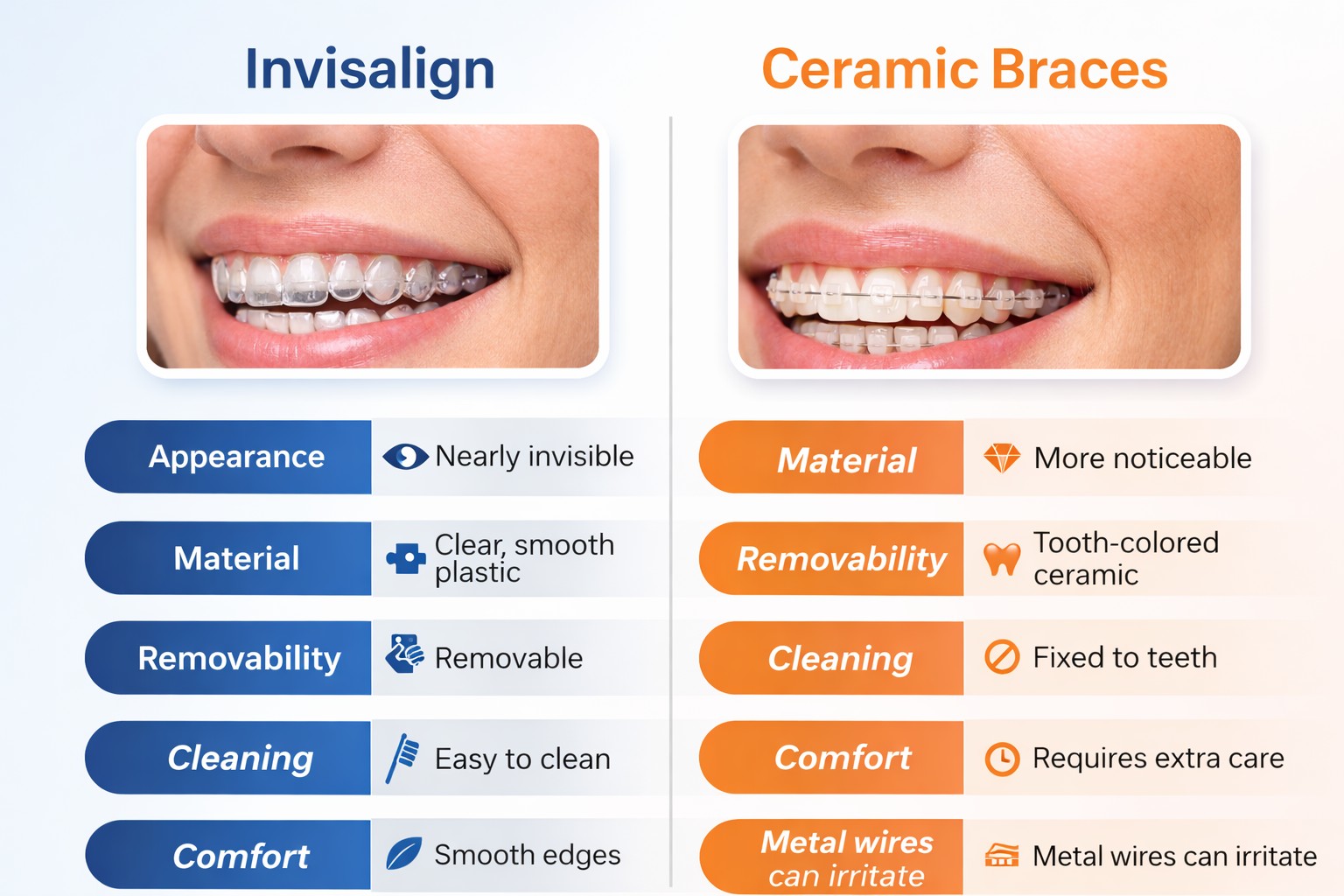
Here’s a quick overview of how the two options stack up on the factors that matter most to most patients:
- Visibility: Invisalign aligners are less visible in most situations; ceramic braces are subtle but more noticeable up close
- Removability: Invisalign aligners come out; ceramic braces are fixed for the duration of treatment
- Comfort: Invisalign tends to feel smoother against cheeks and lips; ceramic brackets can cause mild irritation early on
- Oral hygiene: Easier with Invisalign since aligners are removed for brushing and flossing
- Staining risk: Clear aligners can yellow slightly if not cleaned properly; ceramic brackets or elastic ties may stain with certain foods and drinks
- Treatment complexity: Ceramic braces can handle a wider range of alignment issues, including more significant bite corrections
- Discipline required: Invisalign requires consistent wear; ceramic braces work without any additional input from the patient
Which Option Is Right for You?
There’s no single right answer — the best choice depends on your individual situation. Here are some general patterns that tend to guide patients toward one option or the other.
Invisalign may be a better fit if you:
- Want the most discreet treatment possible for professional or social settings
- Have mild to moderate crowding, spacing, or bite issues
- Value the ability to eat and drink freely
- Are confident you’ll wear the aligners consistently throughout the day
- Want easier brushing and flossing routines
Ceramic braces may be a better fit if you:
- Have more complex alignment or bite correction needs
- Prefer not to manage a removable appliance
- Don’t mind fixed hardware as long as it blends with your teeth
- Are treating younger patients who may struggle with aligner compliance
The only way to know for sure which option is clinically appropriate for your smile is to have a consultation with a dentist or orthodontist who can evaluate your bite, bone structure, and overall dental health.
Costs and Insurance
Cost is often a deciding factor for patients weighing these two options. In most cases, Invisalign and ceramic braces fall in a similar price range, though Invisalign treatment tends to be slightly more expensive overall — partly due to the lab costs involved in fabricating custom aligners.
Dental insurance coverage varies by plan. Many plans that cover orthodontic treatment will apply the same benefit regardless of whether you choose braces or aligners. It’s worth checking with your provider before your consultation so you know what out-of-pocket costs to expect.
For patients who are also considering other treatments alongside orthodontic work — like teeth whitening after treatment — discussing the full picture with your dental provider can help you plan and budget accordingly.
Looking for a dental solution? Contact Pinnacle Dental
Both Invisalign and ceramic braces are solid options for patients who want a more discreet orthodontic experience. The right choice comes down to your clinical needs, your daily habits, and what kind of treatment experience you’re looking for.
If aesthetics are your top priority and your case is a good fit, Invisalign gives you the most subtle option available today. If you need more comprehensive correction or prefer a hands-off approach, ceramic braces offer a reliable middle ground between effectiveness and appearance.
Either way, the first step is the same: a conversation with a dental provider like Pinnacle Dental who can evaluate your smile and walk you through your real options. Schedule a consultation by calling (972) 801-2788.
FAQs About Invisalign vs Ceramic Braces
Is Invisalign truly invisible?
Not entirely, but it’s close. The aligners are made from clear plastic that blends with your teeth, and most people won’t notice them in conversation. If you have attachments bonded to your teeth, those can be visible at close range.
Can ceramic braces stain?
The ceramic brackets themselves are generally stain-resistant, but the elastic ties used to hold the archwire can absorb color from food and drinks like coffee, tea, or tomato-based sauces. Your orthodontist will replace these ties at each appointment, so staining is usually short-lived.
How long does each treatment take?
Treatment time varies significantly depending on the complexity of your case. Invisalign treatment often ranges from 6 to 18 months for mild to moderate corrections. Ceramic braces may be worn for 18 months to 3 years for more involved cases. Your dentist will give you a realistic estimate after your evaluation.
Can I switch from ceramic braces to Invisalign mid-treatment?
In some cases, yes. Switching mid-treatment is possible but not always practical or advisable. It depends on how much progress has been made, your specific alignment needs, and your provider’s recommendation. This is a conversation worth having if you’re having second thoughts.
Are ceramic braces more comfortable than metal braces?
Generally speaking, yes. The ceramic material is smoother than metal and less likely to irritate the soft tissue inside your cheeks and lips. However, ceramic brackets can sometimes be slightly more brittle than metal, which is worth keeping in mind if you play contact sports.
Does Pinnacle Dental offer both Invisalign and ceramic braces?
Pinnacle Dental offers Invisalign treatment. For patients with more complex orthodontic needs, the team can discuss all available options and help determine the best path forward during your consultation.