
You invested time, money, and patience into getting braces — so noticing your teeth drifting back out of alignment years later can feel deeply frustrating. The good news? Post-braces shifting is incredibly common, and there are clear, proven reasons it happens — plus effective ways to stop it in its tracks.
Whether your front teeth have begun to crowd again, or a gap you thought was gone forever has quietly returned, this guide walks you through exactly what’s going on and what you can do about it.
Is It Normal for Teeth to Shift After Braces?
Yes — and more people experience it than you might expect. Teeth are not rigid structures locked in place by bone alone. They’re held by a network of ligaments, soft tissue, and bone that remains dynamic throughout your life. Once braces are removed, that system needs reinforcement to maintain the new alignment.
Without the right support, natural forces — chewing, speaking, even sleeping — gradually nudge teeth back toward their original positions. This tendency is called orthodontic relapse, and it can begin as soon as a few months after braces come off if nothing is done to prevent it.
Quick Fact: Studies suggest that some degree of tooth movement occurs in the majority of patients who completed orthodontic treatment without consistent retainer use — making post-treatment care just as important as the treatment itself.
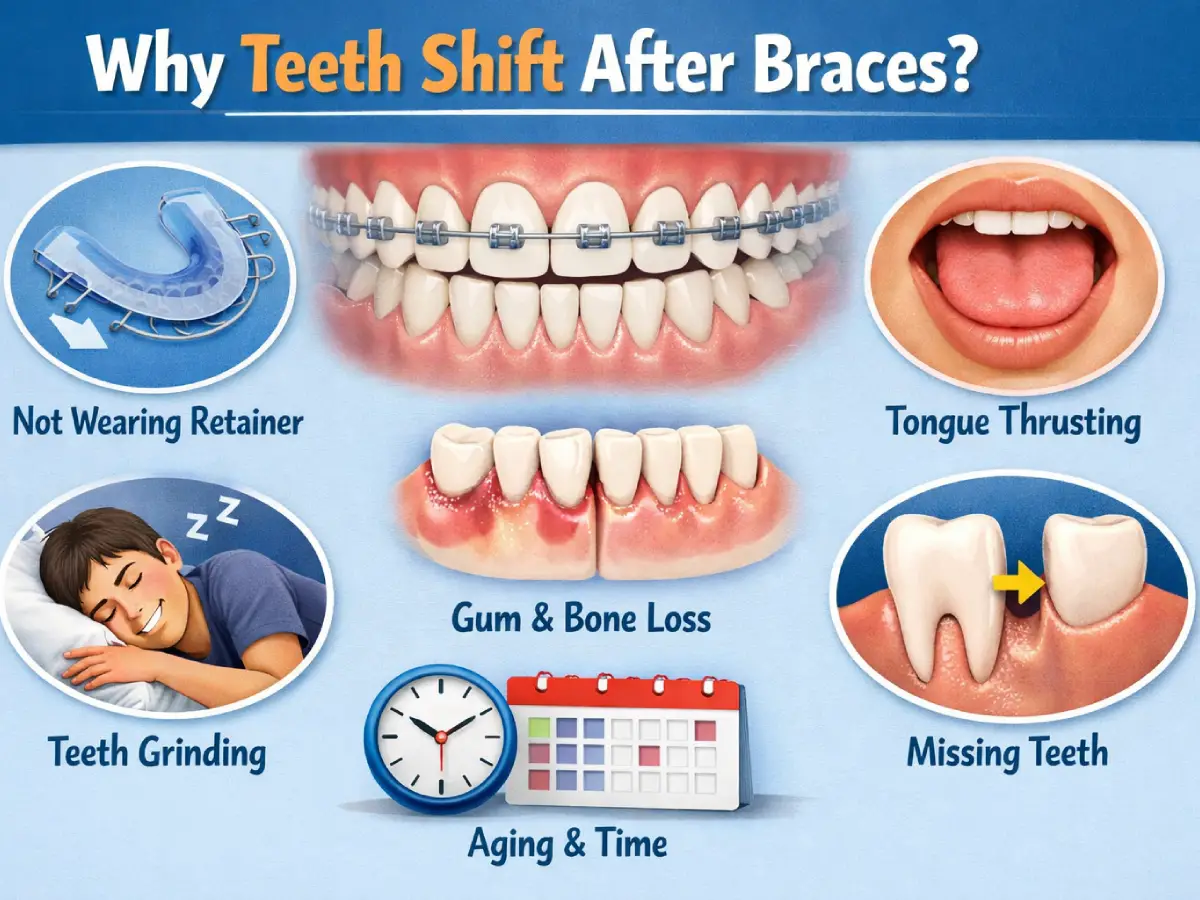
Top Causes of Teeth Shifting After Braces
Understanding why your teeth move is the first step toward preventing it. Here are the most common culprits:
Not Wearing Your Retainer
This is the single most common cause. Retainers are not optional — they’re a long-term commitment that keeps your results in place.
Natural Aging of the Jaw
As you age, your jawbone gradually narrows, causing the lower front teeth to crowd. This happens even to people who never had braces.
Gum Disease & Bone Loss
Periodontal disease weakens the supporting structures around teeth, allowing them to drift more easily. Untreated gum problems can undo orthodontic work quickly.
Missing Teeth
When a tooth is lost and not replaced, neighboring teeth gradually lean or tilt into the empty space over months and years.
Tongue Thrust & Oral Habits
Habitually pressing your tongue against your teeth, grinding (bruxism), or thumb sucking can exert consistent pressure that moves teeth over time.
Wisdom Teeth Eruption
Though research is mixed, incoming wisdom teeth can create pressure that contributes to front tooth crowding in some patients.
If you’ve noticed crowding or spacing issues returning, it’s worth scheduling a checkup with your dental provider to pinpoint which of these factors may be at play for you.
The Retainer Problem: Why People Stop Wearing Them
Dentists and orthodontists agree: retainers should be worn indefinitely — at minimum every night. Yet most patients gradually wear them less and less until they stop altogether.
The most common reasons people abandon their retainers include:
- The retainer becomes uncomfortable after not being worn for a while
- It gets lost or broken and never replaced
- Patients assume their teeth are “set” after a few years
- Busy schedules make consistent use easy to forget
- No one reminded them that retainer use is lifelong
If your retainer no longer fits comfortably, do not force it. That’s a sign your teeth have already moved, and wearing an ill-fitting retainer can cause injury. Instead, visit your dental provider to have a new one made and to assess how much movement has occurred.
How Missing Teeth Accelerate Shifting
One of the less-discussed causes of post-braces relapse is tooth loss. When a tooth — even a back molar — is extracted or falls out and not replaced, the surrounding teeth begin to drift into that space. This domino effect can ultimately disturb the alignment you worked so hard to achieve.
Replacing missing teeth is about far more than aesthetics. Dental implants are widely regarded as the gold standard solution because they replace the entire tooth, including the root. This preserves jawbone density and prevents neighboring teeth from shifting, keeping your overall bite and alignment intact.
If you’ve had tooth loss since completing orthodontic treatment, addressing it promptly is one of the most important steps you can take to protect your smile. Dental bridges are another option that can prevent shifting by spanning the gap and maintaining the spacing your orthodontist worked to create. You can learn more about dental bridges to see if they’re the right fit for your situation.
What You Can Do: Practical Solutions
The right solution depends on how much movement has occurred and what’s causing it. Here’s a look at your main options:
Resume or Replace Your Retainer
For minor shifting, a new custom retainer may be all you need. Consistent nightly wear can hold teeth in their corrected position and prevent further movement. If you haven’t worn yours in months, see your dentist before attempting to wear the old one.
Clear Aligners to Re-Correct the Shift
If teeth have moved noticeably, clear aligners offer a discreet, comfortable way to guide them back into alignment. Many former braces patients find that a short course of aligner therapy restores their smile without the discomfort of traditional metal braces. If you’re interested in exploring this route, our team offers Invisalign clear aligner treatment as an effective solution for adults looking to re-correct post-braces shifting.
Address Underlying Gum Disease
If periodontal disease is contributing to tooth movement, treating it is non-negotiable. Healthy gums and bone are the foundation of stable teeth. No orthodontic correction will hold long-term if the supporting structures are compromised.
Replace Missing Teeth Promptly
Don’t wait to address tooth loss. The longer a gap remains, the more neighboring teeth drift. Speak with your dentist about implant or bridge options suited to your specific situation.
Cosmetic Solutions for Mild Concerns
In some cases where shifting is minor and functional bite is unaffected, cosmetic options like porcelain veneers or dental bonding can improve the appearance of your smile without full re-treatment.
How to Prevent Teeth Shifting Going Forward
Whether you’re just finishing braces or trying to stabilize a smile that’s already started to drift, these habits make a significant difference:
- Wear your retainer every night — forever. There is no phase where you “don’t need it anymore.”
- See your dentist regularly. Routine checkups catch early movement before it becomes a significant problem. Regular dental exams and cleanings are your first line of defense. (Future content: why biannual checkups matter for orthodontic patients.)
- Address grinding (bruxism). If you grind your teeth at night, a custom night guard can prevent the pressure that drives shifting. Ask about sleep-related dental appliances that may help protect your alignment.
- Maintain excellent gum health. Brush twice daily, floss every day, and treat any gum issues early.
- Replace missing teeth quickly. Every month a gap exists, neighboring teeth shift a little further.
- Avoid habits that pressure your teeth — chewing on pens, biting nails, or prolonged thumb sucking.
Pro Tip: If you notice your retainer feels tighter than usual after a vacation or busy period when you skipped wearing it, that’s your teeth telling you they’ve started to move. Get back to consistent use immediately and schedule a checkup.
When Should You See a Dentist About Shifting Teeth?
Don’t wait until shifting becomes obvious or uncomfortable. Schedule a visit if you notice any of the following:
- Your retainer no longer fits or feels significantly tighter than before
- You can see visible gaps or crowding that weren’t there before
- Your bite feels different — certain teeth touch first, or chewing feels uneven
- You’re experiencing jaw soreness, headaches, or facial muscle tension
- You’ve lost a tooth and haven’t replaced it yet
Our team at Pinnacle Dental takes a comprehensive approach to smile maintenance — from evaluating how much movement has occurred to recommending the most conservative, effective solution for your unique situation. Whether that means a new retainer, a short aligner course, or a cosmetic treatment to refine your appearance, we’ll guide you every step of the way.
Families looking for ongoing preventive care to keep their smiles in great shape long after orthodontic treatment can also benefit from our comprehensive family dental care services, designed to support patients at every stage of life.
Ready to Protect — or Restore — Your Smile?
Our Pinnacle Dental team is here to help you evaluate your current alignment and find the right solution, whether that’s a new retainer, clear aligners, or a comprehensive smile plan.
Frequently Asked Questions
Can teeth really shift years after braces are removed?
Yes, absolutely. Teeth can and do shift throughout your entire life, not just in the period immediately after braces. Without consistent retainer use, teeth are susceptible to gradual movement due to natural jaw changes, chewing pressure, and soft tissue forces — even decades after orthodontic treatment ends.
How long do I actually need to wear my retainer?
The honest answer is: indefinitely. Most orthodontists recommend nightly retainer use for life, because the forces that move teeth never stop. Some patients transition to wearing their retainer a few nights a week after several years of stability, but this should be done under your dentist’s guidance — not independently decided.
Do I need to get braces again if my teeth have shifted?
Not necessarily. For minor relapse, a new retainer or a short course of clear aligners is often sufficient to restore alignment. Traditional braces are typically only recommended when significant crowding, spacing, or bite issues have developed. A dental evaluation will tell you exactly what level of correction is needed.
Can wisdom teeth cause my teeth to shift after braces?
This is a widely debated topic in dentistry. Some research suggests that wisdom teeth can contribute to front tooth crowding by exerting pressure on adjacent teeth, while other studies have found insufficient evidence of a direct link. Regardless of wisdom teeth, the most significant factor in post-braces shifting is retainer compliance. Your dentist can assess whether wisdom tooth removal is advisable based on your individual X-rays and tooth position.
Is it too late to fix teeth that have shifted after braces?
It’s almost never too late. Adult patients successfully re-correct post-braces shifting with clear aligners every day. The earlier you address the movement, the simpler and faster the correction tends to be — but even significant shifts can be treated effectively. The key is to stop the problem from progressing and seek professional advice sooner rather than later.
Can losing a tooth cause my other teeth to shift even if I had braces?
Yes. Tooth loss is one of the fastest drivers of post-braces shifting. When a tooth is removed and not replaced, the neighboring teeth begin leaning into the gap within months. This disrupts the carefully balanced alignment achieved during orthodontic treatment. Replacing missing teeth with implants or bridges is essential to preserving your smile’s alignment.