
If you’ve recently been told you need a cavity filled, you’ve probably been asked the question :tooth-colored or silver? It sounds simple, but the choice involves real differences in safety, longevity, appearance, and cost. This guide breaks it all down so you can walk into your next appointment feeling informed and confident.
Understanding the Two Types of Dental Fillings
Dental fillings have one job: seal a cavity after the decay is removed so bacteria can’t move back in. How they do that job — and what they look like while doing it — depends entirely on the material used.
Composite Resin (Tooth-Colored Fillings)
Composite fillings are made from a mixture of plastic resin and finely ground silica or glass particles. The material is applied in layers, shaped to match your tooth, and then hardened instantly with a special curing light. The end result blends so naturally with your enamel that most people can’t tell a filling is even there.
Because composite bonds directly to the tooth structure, it often allows your dentist to preserve more of the healthy tooth — a significant advantage over materials that require more drilling to create a mechanical lock.
Dental Amalgam (Silver Fillings)
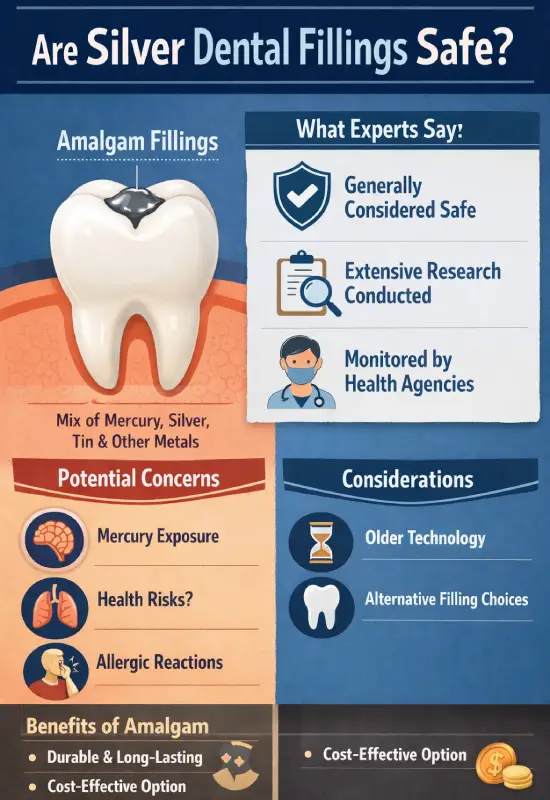
Amalgam has been used in dentistry for more than 150 years. It’s a durable alloy made from a combination of metals — typically silver, tin, and copper — held together with mercury. Despite the word “mercury” causing understandable concern, the mercury in amalgam is bound in a stable form that behaves very differently from the pure or organic forms of mercury associated with toxicity.
Amalgam is known for being exceptionally hard, affordable, and long-lasting, which is why it’s still in widespread use today, particularly for restoring back teeth under heavy chewing pressure.
Side-by-Side Comparison
Not sure which option suits your situation? Here’s a quick reference:
| Feature | Tooth-Colored (Composite) | Silver (Amalgam) |
|---|---|---|
| Appearance | ✔ Matches natural tooth color | ✖ Noticeably metallic/dark |
| Durability | 7–10+ years (modern composites) | 10–15+ years (very strong) |
| Mercury Content | ✔ Mercury-free | Contains bound mercury (FDA: safe for most) |
| Tooth Preservation | ✔ Less drilling required | More tooth structure removed |
| Sensitivity | Mild, temporary (normal) | Can conduct hot/cold temperatures |
| Cost | Higher (more skill + time) | ✔ Lower upfront cost |
| Best For | Visible teeth, small–medium cavities | Large cavities in back teeth |
| Insurance Coverage | Partial for back teeth (varies) | ✔ Typically well-covered |
Are Silver Fillings Actually Safe?
This is the question that comes up most often — and understandably so. The word “mercury” is alarming when you first hear it. Here’s what the research actually says.
The FDA, the American Dental Association (ADA), and the World Health Organization (WHO) all consider dental amalgam safe for the general population. The mercury in amalgam is chemically bound with other metals, making it fundamentally different from the pure liquid mercury or methylmercury that causes neurological harm. Studies have consistently shown that the amount of mercury vapor released by amalgam fillings is well below levels considered hazardous.
That said, there are specific groups for whom amalgam is best avoided:
- Pregnant or breastfeeding individuals
- Children under six years old
- People with kidney disease or pre-existing neurological conditions
- Anyone with a known allergy to mercury or other metals in amalgam
Worth noting: In 2023, the FDA updated its guidance to recommend that certain higher-risk groups avoid amalgam fillings where clinically appropriate. If you fall into any of the categories above, ask your dentist about composite or other alternatives.
Composite fillings are entirely mercury-free, making them the go-to choice for patients who want to eliminate that concern altogether. For most people considering family dental care — especially for children — the peace of mind that comes with a mercury-free filling is a meaningful factor.
Which Filling Lasts Longer?
Historically, amalgam had a clear durability advantage. A well-placed silver filling could last 15 years or more, even in high-pressure molar areas. That’s still true today.
However, composite resin technology has advanced dramatically. Modern composite materials are far more wear-resistant than those used even a decade ago. With proper care — brushing twice daily, regular professional cleanings and exams, and avoiding habits like nail-biting or chewing ice — tooth-colored fillings routinely last 7–10 years, and often longer.
The size and location of the cavity matters a great deal here. For a small to medium-sized cavity on a front tooth or premolar, composite is an excellent long-term choice. For a very large cavity on a back molar that takes the brunt of your chewing forces, your dentist may still recommend amalgam — or discuss options like an inlay, onlay, or dental crown depending on how much tooth structure remains.
Pro tip: The longevity of any filling depends less on the material and more on how well you maintain your oral health. Brushing, flossing, and keeping up with routine checkups are the single biggest factors in how long your restoration lasts.
Pros and Cons at a Glance
Composite Advantages
- Virtually invisible — matches tooth color
- Mercury-free formulation
- Bonds directly, preserving more natural tooth
- Hardens immediately with curing light
- Easily repaired if chipped
- Suitable for front and back teeth
Composite Disadvantages
- Higher cost than amalgam
- Longer chair time to place
- Can stain over time (coffee, tea, wine)
- May not be fully covered by insurance for molars
- Slightly less durable under extreme bite forces
Amalgam Advantages
- Extremely durable and wear-resistant
- Lower cost, wider insurance coverage
- Faster placement for some large cavities
- 150+ year track record of use
- Proven in high-stress molar areas
Amalgam Disadvantages
- Highly visible — dark gray/silver color
- Contains mercury (safe for most, not all)
- Requires more tooth removal to place
- Can cause tooth to appear darker over time
- Not recommended for certain at-risk groups
The Aesthetics Factor: Does Appearance Really Matter?
For many patients, appearance is the deciding factor — especially for cavities on front teeth or teeth that show when you smile. A composite filling on a front tooth is virtually undetectable, even to a dentist, when placed skillfully. This makes tooth-colored fillings a natural fit for anyone pursuing a smile they feel confident about.
If you’re interested in broader cosmetic improvements — such as covering stains, reshaping teeth, or improving overall smile symmetry — cosmetic dentistry in Plano offers solutions beyond fillings alone, from bonding to veneers to whitening. It’s worth discussing your full smile goals at your next appointment.
For back teeth that aren’t visible when you speak or smile, aesthetics matter less — though some patients still prefer composite even on their molars simply for peace of mind about materials.
Cost and Insurance Considerations
The cost difference between composite and amalgam fillings is real but manageable for most patients. Composite fillings typically cost 20–50% more than amalgam, reflecting the additional skill, time, and material quality required.
Insurance coverage varies widely. Most PPO plans cover amalgam fillings fully. For composite fillings on back teeth, many plans cover the amalgam rate and require you to pay the difference — known as a “least costly alternative” clause. It’s always smart to ask your insurance provider before your appointment.
At Pinnacle Dental, we work with all major PPO plans and offer an in-house membership plan for patients without insurance — so cost doesn’t have to be a barrier to quality care. Contact our team to discuss your options before your visit.
Should You Replace Your Old Silver Fillings?
One of the most common questions we hear is: “I have old silver fillings — should I swap them out for white ones?”
The honest answer: not necessarily. If your amalgam fillings are intact and functioning well, removing them isn’t recommended. The removal process itself can temporarily release more mercury vapor than leaving the filling alone, and removing a healthy filling means removing additional healthy tooth structure.
However, if a silver filling is cracked, worn, leaking, or causing tooth pain, that’s the ideal moment to discuss replacing it — often with a composite or, depending on the size, a dental crown or bridge restoration if substantial tooth structure has been lost.
So, Which Filling Is Right for You?
There’s no universal right answer — the best filling is the one that suits your specific tooth, your health history, your budget, and your goals. Here’s a simple framework:
- Choose composite if: The cavity is on a visible tooth, you’re pregnant or in a high-risk group, you want a mercury-free option, or aesthetics are important to you.
- Choose amalgam if: The cavity is large and located on a back molar, you’re looking for the most cost-effective and durable option, and you’re not in a contraindicated group.
- Ask about alternatives (inlays, onlays, crowns) if the cavity is very large and may compromise tooth strength regardless of filling material.
Your dentist is the best person to make this call with you. A thorough exam, digital X-rays, and an honest conversation about your preferences will always lead to a better outcome than any general rule of thumb. At Pinnacle Dental, Dr. Steve Jang and our team take time to explain every option before moving forward — no rushed decisions, no pressure.
If you have questions about your existing fillings or need a new cavity treated, we serve patients across Plano, Frisco, and surrounding communities. You can also explore our dental health blog for more helpful guidance on maintaining a healthy smile.
Want to learn more? Ask us about how long dental fillings last by material type and what to expect during a composite filling procedure — great topics we’ll be covering in future guides.
Ready to Talk Fillings With a Dentist You Can Trust?
Dr. Steve Jang and the Pinnacle Dental team are here to help you make the right choice for your smile — with no pressure and no surprises.
Book Your Appointment Family Dentistry Services
Pinnacle Dental — Dentist in Plano & Frisco, TX. This article is for informational purposes only and does not constitute professional dental advice. Please contact our office to discuss your individual situation.
Frequently Asked Questions
Q Are silver (amalgam) fillings safe?
Yes. Major health organizations — including the FDA and ADA — consider dental amalgam safe for most patients. The mercury in amalgam is bound with other metals and remains stable, releasing only minimal levels far below harmful thresholds. However, individuals who are pregnant, breastfeeding, or have kidney conditions are generally advised to choose an alternative filling material.
Q How long do tooth-colored fillings last?
Modern composite resin fillings typically last 7–10 years with good oral hygiene and regular dental checkups. High-quality composite restorations placed by an experienced dentist can sometimes last considerably longer, though amalgam still holds an edge in extreme bite-force situations.
Q Do tooth-colored fillings cost more than silver fillings?
Yes, composite fillings are generally more expensive than amalgam — often 20–50% more — because they require additional placement time, skill, and material. Many dental insurance plans cover composite fillings fully for front teeth but only at the amalgam rate for back teeth, so it’s worth verifying your benefits ahead of time.
Q Should I replace my old silver fillings with white ones?
Removing intact, healthy amalgam fillings is generally not recommended. The removal process can temporarily increase mercury vapor exposure, and drilling away a working filling removes additional healthy tooth structure. If your silver filling is cracked, worn, or failing — that’s the right time to discuss replacement with your dentist.
Q Which filling is better for back teeth?
Historically, amalgam was the go-to choice for back molars due to its exceptional strength under chewing forces. Today’s advanced composite resins perform very well in posterior teeth too. Your dentist will weigh cavity size, bite pressure, and your preferences before recommending the best material for your specific situation.
Q Can I get a tooth-colored filling if I need sedation?
Absolutely. Composite fillings can be placed under sedation just as easily as amalgam. If dental anxiety is a concern, sedation dentistry in Plano makes the process completely stress-free regardless of which filling material you choose.