
If you experience sharp pain or discomfort when drinking cold water, iced beverages, or eating cold foods, you are likely dealing with tooth sensitivity. This common dental problem occurs when the protective layers of your teeth become weakened or exposed.
The pain can range from mild discomfort to sudden sharp sensations, making it difficult to enjoy everyday foods and drinks. Tooth sensitivity is often a sign of underlying dental issues that require proper care and attention.
Understanding the causes of sensitivity and seeking proper dental care in Frisco can help prevent the problem from worsening. A professional evaluation can identify the root cause and provide effective treatment to protect your teeth and restore comfort.
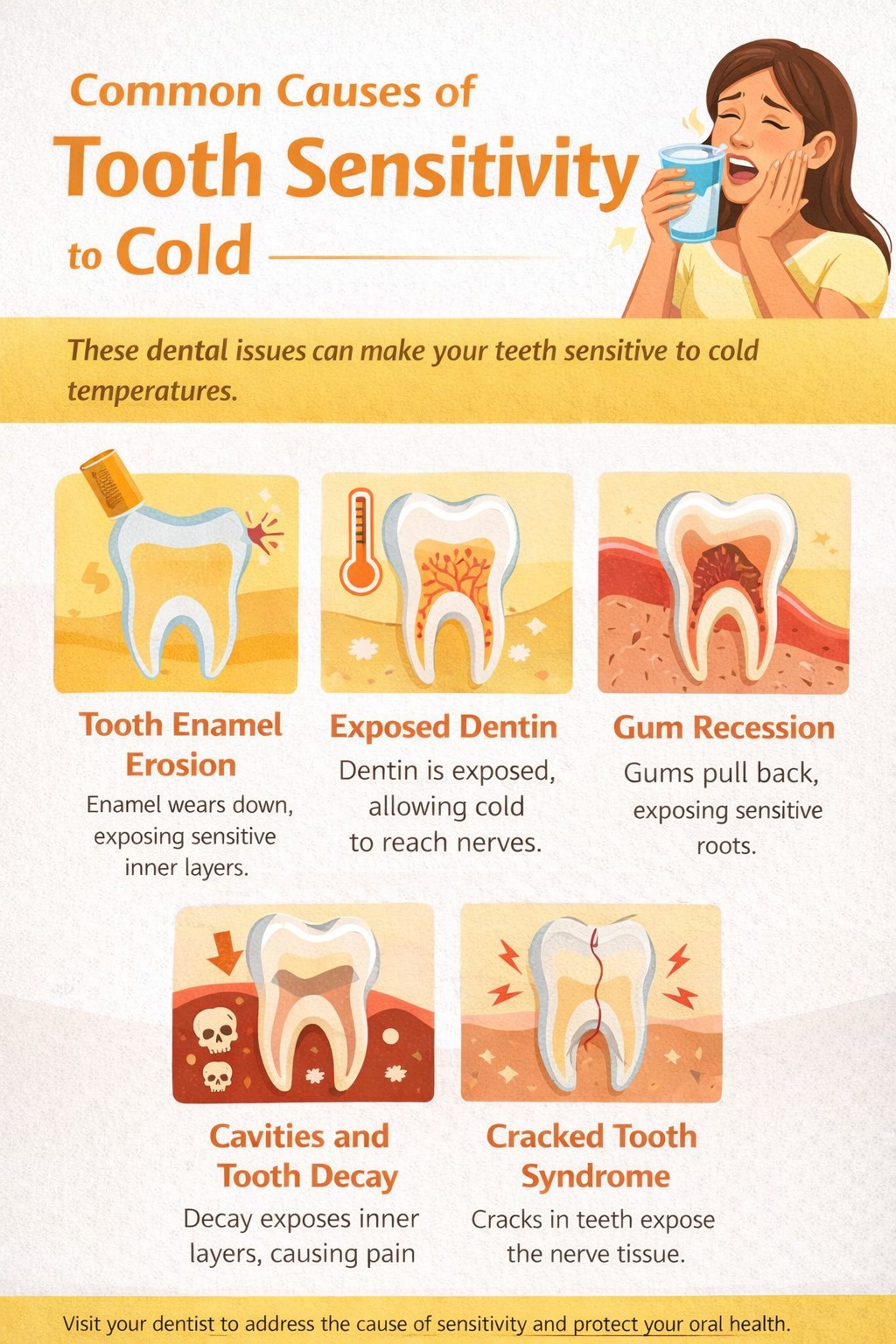
Common Causes of Tooth Sensitivity to Cold
Several dental conditions can cause your teeth to become sensitive to cold temperatures. Identifying the cause is the first step toward finding the right treatment.
1. Tooth Enamel Erosion
Tooth enamel is the hard outer layer that protects your teeth. When enamel wears down due to acidic foods, aggressive brushing, or aging, it exposes the inner layers of the tooth. This condition, known as tooth enamel erosion, makes teeth more sensitive to temperature changes. Common causes of enamel erosion include:
- Acidic foods and beverages
- Teeth grinding
- Improper brushing techniques
- Acid reflux
2. Exposed Dentin
Beneath the enamel is a softer layer called dentin. When enamel wears away or gums recede, the dentin becomes exposed. This condition, known as exposed dentin, allows cold temperatures to reach the nerves inside your teeth, causing pain. Exposed dentin is one of the most common causes of tooth sensitivity.
3. Gum Recession
Gum recession occurs when the gum tissue pulls away from the teeth, exposing the roots. Tooth roots do not have enamel protection, making them highly sensitive to cold, heat, and pressure. Common causes include:
- Gum disease
- Aggressive brushing
- Poor oral hygiene
- Aging
4. Cavities and Tooth Decay
Cavities and tooth decay can create small holes in the teeth, exposing the inner layers and causing sensitivity. If left untreated, cavities can worsen and lead to more serious dental problems. Early detection through a professional dental exam can help prevent further damage.
5. Cracked Tooth Syndrome
A cracked or damaged tooth can expose the inner nerve tissue, leading to pain when exposed to cold temperatures. This condition is known as cracked tooth syndrome and often requires prompt dental treatment to prevent complications.
How to Reduce Tooth Sensitivity?
There are several effective treatments and preventive steps to reduce tooth sensitivity and protect your oral health.
1. Use Desensitizing Toothpaste
Desensitizing toothpaste helps block nerve signals and reduce sensitivity over time. Regular use can provide long-term relief.
2. Fluoride Treatment
Professional fluoride treatment strengthens tooth enamel and helps reduce sensitivity. This treatment is commonly recommended by dentists for patients with enamel erosion or sensitivity.
3. Maintain Proper Oral Hygiene
Good oral hygiene practices can help protect your teeth and prevent sensitivity. Tips include:
- Brush gently with a soft-bristled toothbrush
- Floss daily
- Avoid acidic foods and drinks
- Use fluoride toothpaste
4. Visit a Dentist for Evaluation
If sensitivity persists, it is important to visit a dentist for a proper diagnosis. A dentist can identify the cause and recommend the appropriate treatment to protect your oral health. Patients looking for the best dentist in Frisco can receive personalized care, including advanced treatments such as fillings, crowns, or other restorative procedures to eliminate sensitivity and protect damaged teeth.
When Tooth Sensitivity May Require Advanced Treatment
In some cases, sensitivity may be caused by more serious dental conditions that require professional treatment. Procedures such as fillings, crowns, or even a dental implant solution may be recommended if tooth damage or loss is present. Early diagnosis and treatment help prevent further complications and protect your long-term oral health.
Facing tooth sensitivity? Schedule a dental appointment today
Tooth sensitivity when drinking cold beverages is usually caused by enamel erosion, exposed dentin, gum recession, or tooth decay. While mild sensitivity can often be managed with desensitizing toothpaste and fluoride treatment, persistent pain may require professional dental care.
Pinnacle Dental ensures early diagnosis and proper treatment, helping you protect your teeth and enjoy cold foods and drinks without discomfort. Schedule an appointment by calling (469) 421-8161 and see the difference.
FAQs About Tooth Sensitivity to Cold
Why do my teeth hurt when I drink cold water?
Your teeth may hurt when drinking cold water because the protective enamel has worn down, exposing the dentin underneath. This allows cold temperatures to reach the nerves inside your tooth, causing sensitivity or pain.
Is tooth sensitivity to cold a sign of a cavity?
Yes, tooth sensitivity to cold can be a sign of a cavity or tooth decay. Cavities create small openings in the tooth, exposing sensitive inner layers that react to cold temperatures.
Can sensitive teeth heal on their own?
Mild sensitivity may improve with proper oral care and desensitizing toothpaste. However, persistent sensitivity often requires professional dental treatment to address the underlying cause.
What causes sudden tooth sensitivity?
Sudden tooth sensitivity can be caused by enamel erosion, gum recession, cracked teeth, cavities, or recent dental procedures. A dental exam can help identify the exact cause.
How can I stop my teeth from hurting when I drink cold beverages?
You can reduce sensitivity by using desensitizing toothpaste, avoiding acidic foods, practicing good oral hygiene, and visiting a dentist for professional treatment such as fluoride application.
Is tooth sensitivity a serious problem?
Tooth sensitivity can be a sign of underlying dental problems such as decay, gum disease, or enamel damage. It is important to see a dentist if the pain persists.