
Breaking a tooth can be painful and stressful, but taking the right steps immediately can help reduce pain and prevent further damage. Knowing what to do before visiting an emergency dentist is essential for protecting your oral health.
If you experience a tooth fracture, seeking care from the Dentist as soon as possible can help restore your tooth and prevent complications such as infection or nerve damage.
Immediate Steps to Take After Breaking a Tooth at Home
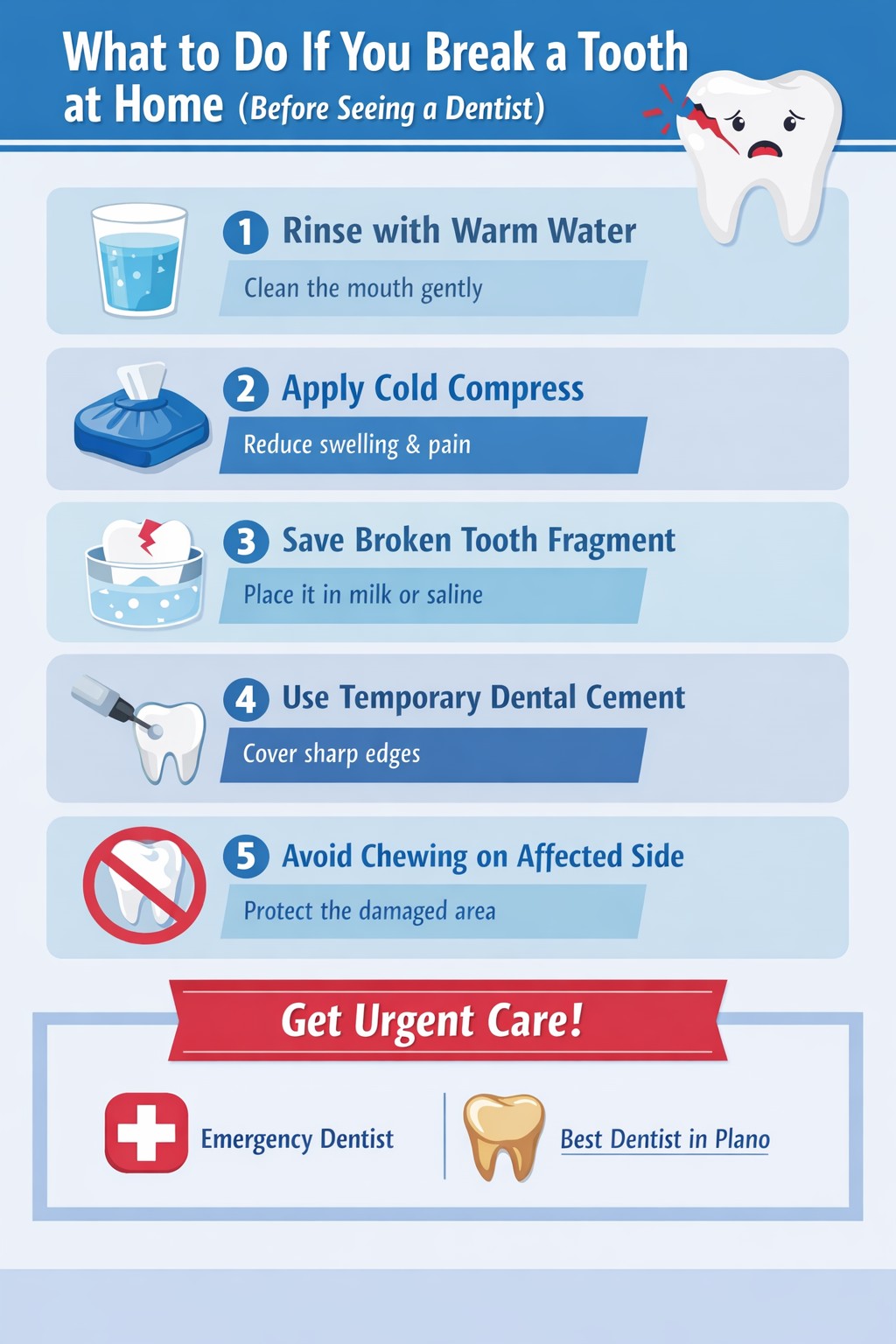
If you break a tooth at home, it’s important to act quickly to protect the damaged area and reduce pain. Start by rinse with warm water to clean the mouth, apply cold compress to reduce swelling, and save the broken tooth fragment if possible.
You can use temporary dental cement to cover sharp edges and avoid chewing on the affected side to prevent further damage. These steps help with pain management before dentist treatment, but you should seek urgent dental care from the best dentist in Plano to restore your tooth and protect your oral health.
Step 1: Rinse Your Mouth with Warm Water
The first step after breaking a tooth is to rinse with warm water. This helps clean the area, remove debris, and reduce the risk of infection. Keeping the area clean is important, especially if the fracture exposes sensitive parts of the tooth.
Step 2: Save the Broken Tooth Fragment
If part of your tooth breaks off, carefully save the broken tooth fragment, especially if you are experiencing tooth pain when biting down which may indicate deeper damage. Place it in a clean container with milk or saline solution to preserve it. In some cases, your dentist may be able to reattach the fragment or use it during a dental crown procedure to restore the tooth and relieve discomfort when biting.
Step 3: Apply a Cold Compress to Reduce Swelling
Applying a cold compress to the outside of your cheek helps reduce swelling and pain. This simple step supports pain management before dentist treatment and helps control inflammation until you receive professional care.
Step 4: Use Temporary Dental Cement
If the broken tooth has sharp edges or feels sensitive, you can use temporary dental cement available at most pharmacies. This protects the tooth and reduces discomfort until you visit an emergency dentist for permanent treatment.
Step 5: Avoid Chewing on the Affected Side
To prevent further damage, avoid chewing on the affected side of your mouth. Broken teeth are vulnerable, and pressure can worsen the fracture or expose the exposed tooth nerve, increasing pain and complications.
Step 6: Understand Tooth Fracture Types
There are different tooth fracture types, ranging from minor chips to severe breaks exposing the nerve. Minor fractures may only require bonding, while severe fractures may need a dental crown or root canal treatment. An experienced emergency dentist can evaluate the damage and recommend the best solution.
Step 7: Manage Pain Until You See a Dentist
You can take over-the-counter pain relievers to help with pain management before dentist treatment. Avoid extremely hot or cold foods, as sensitivity may increase if the inner tooth structure is exposed.
Step 8: Seek Urgent Dental Care Immediately
A broken tooth is a dental emergency that requires urgent dental care. Visiting the dentist quickly ensures proper treatment, prevents infection, and restores your tooth’s function and appearance. Treatment options may include bonding, veneers, or a dental crown depending on the severity of the damage.
Facing severe tooth issues? Contact a dentist
If you break a tooth at home, taking immediate steps such as cleaning the area, protecting the tooth, and managing pain can make a significant difference. However, professional treatment from Pinnacle Dental is essential for proper diagnosis and restoration.
Prompt care helps protect your smile and prevents long-term dental problems. Schedule a consultation by calling at 972-801-2788 and get instant relief from toothache.
FAQs: What to Do If You Break a Tooth at Home
What should I do immediately after breaking a tooth?
If you break a tooth, first rinse your mouth with warm water to clean the area. Apply a cold compress to reduce swelling and pain, and save the broken tooth fragment if possible. These steps help protect the tooth until you see an Emergency Dentist.
Is a broken tooth considered a dental emergency?
Yes, a broken tooth is often a dental emergency, especially if there is severe pain, bleeding, or an exposed tooth nerve. You should seek urgent dental care from an emergency dentist in Plano or your nearest dental provider as soon as possible.
Can a broken tooth heal on its own?
No, a broken tooth cannot heal on its own. Professional treatment from the Best Dentist in Plano may include dental bonding, fillings, or a dental crown Plano to restore the tooth and prevent further damage.
How can I manage pain from a broken tooth at home?
For pain management before dentist treatment, you can take over-the-counter pain relievers, apply a cold compress, and avoid chewing on the affected side. Temporary dental cement can also help protect the damaged tooth.
What happens if I don’t treat a broken tooth quickly?
Delaying treatment can lead to infection, increased pain, and permanent tooth damage. The exposed tooth nerve may become infected, requiring more complex treatments like root canals or crowns.
Should I keep the broken piece of my tooth?
Yes, you should save the broken tooth fragment in milk or saline solution. Your emergency dentist may be able to reattach it or use it to restore your tooth.
What treatments are available for a broken tooth?
Treatment options depend on the severity of the fracture and may include dental bonding, fillings, veneers, or a dental crown Plano. Severe cases may require root canal therapy or tooth extraction.