
A brighter smile can completely change the way you look and feel — and teeth whitening is one of the fastest, most affordable ways to get there. But before you book your appointment, most people naturally ask: What will my teeth actually look like afterward? And just as importantly: How long will those results last?
In this guide, we’ll walk you through everything you need to know about the before and after of teeth whitening — from realistic expectations and treatment types to how long your results will hold up and what you can do to make them last even longer.
What Happens to Your Teeth Before a Whitening Treatment?
Before any whitening procedure begins, your dentist will perform a thorough evaluation of your mouth. This step is more important than most people realize. It ensures that your teeth and gums are healthy enough to handle the whitening agents, and it allows your provider to set realistic expectations for your specific situation.
Here’s what typically happens during the pre-treatment phase:
- Oral health check: Cavities, gum disease, and cracked enamel need to be treated first. Whitening on compromised teeth can cause pain and uneven results.
- Shade assessment: Your dentist documents your current tooth color using a shade guide so you can see the actual before-and-after difference.
- Professional cleaning: Surface plaque and tartar are removed so the whitening gel can penetrate evenly.
- Expectation setting: Your provider will explain the degree of whitening you can expect based on the type of discoloration — surface stains vs. deeper, intrinsic stains respond very differently.
If you’ve been thinking about enhancing your smile with cosmetic dental care, whitening is often one of the first procedures your dentist will recommend because it’s non-invasive, quick, and delivers visible results.
What Do Teeth Look Like After Professional Whitening?
The results of professional teeth whitening can be genuinely striking. Most patients leave their appointment with teeth that are noticeably lighter — often 3 to 8 shades whiter — compared to where they started. For many people, it’s one of the most dramatic cosmetic changes they’ll experience without any needles or recovery time.
That said, results aren’t one-size-fits-all. Here’s what influences your after results:
- Type of staining: Yellowing from coffee, tea, or tobacco responds well. Gray tones from antibiotics or trauma are harder to lighten.
- Natural tooth color: Naturally whiter teeth brighten more dramatically than yellowish-gray ones.
- Age: Enamel thins over time, making teeth appear more translucent and harder to whiten significantly.
- Existing dental restorations: Crowns, veneers, and bonding don’t respond to whitening gel, so they may not match your newly brightened natural teeth.
“The best candidates for teeth whitening are those with mild to moderate yellow or brown surface stains. A professional consultation helps determine whether whitening is the right approach — or whether other cosmetic options would deliver better results.”
Types of Whitening Treatments and How Long Results Last
Not all whitening treatments are created equal. The method you choose will have a major impact on how dramatic your results look and, crucially, how long they stick around.
| Treatment Type | How It Works | Typical Longevity |
| In-Office Professional Whitening | High-concentration peroxide gel activated by a special light; completed in one visit | 1–3 years with proper care |
| Custom Take-Home Trays | Dentist-fitted trays with professional-grade gel used at home over 1–2 weeks | 1–2 years |
| Over-the-Counter Strips | Store-bought strips with lower peroxide concentration | 3–6 months |
| Whitening Toothpaste | Mild abrasives remove surface stains; no bleaching action | Ongoing maintenance only |
As you can see, professional in-office whitening offers the longest-lasting results. The high-concentration formulas used in a dental office penetrate tooth enamel more deeply and more consistently than anything available over the counter.
In-Office Whitening: The Gold Standard
In-office whitening — often referred to by brand names like Zoom or Opalescence Boost — is the fastest and most powerful option available. Your dentist applies a protective barrier to your gums, then coats your teeth with a bleaching agent. A special light or laser may be used to accelerate the process. The entire appointment typically takes 60 to 90 minutes.
Patients routinely see results of 6 to 8 shades lighter after just one session. With good habits, those results can last up to three years. Many patients schedule a brief touch-up once a year to keep their smile looking its best.
Custom Take-Home Trays
Custom trays are a popular middle-ground option. Your dentist takes impressions of your teeth and creates trays that fit perfectly. You’ll receive a professional-grade whitening gel to use at home, usually for 30–60 minutes a day over 1–2 weeks. Results are excellent — just slightly more gradual than in-office treatment — and can last 1–2 years.
This option is great for patients who want professional results without a single long appointment, and it gives you trays you can use again for future touch-ups.
How Long Does Teeth Whitening Last? Key Factors
The longevity of your whitening results depends far more on what you do after treatment than on the treatment itself. Here are the factors that matter most:
Diet and Beverages
Staining foods and drinks are the number one reason whitening fades. Coffee, red wine, tea, tomato-based sauces, and dark sodas all contain chromogens — color compounds that bond to tooth enamel. The first 48–72 hours after whitening are especially critical because your enamel pores are temporarily more open.
Dentists commonly recommend following a “white diet” right after treatment — sticking to foods like chicken, rice, bananas, milk, and water during those initial days.
Tobacco Use
Smoking and chewing tobacco are among the fastest ways to reverse whitening results. Tar and nicotine stain enamel deeply and quickly. Patients who quit tobacco after whitening consistently enjoy results that last significantly longer.
Oral Hygiene Habits
Brushing twice daily, flossing, and using an enamel-safe mouthwash all help prevent surface stains from accumulating. Using a whitening toothpaste (with your dentist’s guidance) between professional treatments can also help maintain brightness.
Regular Dental Cleanings
Professional cleanings remove hardened plaque and surface stains before they have a chance to settle in. Routine preventive dental care — ideally every six months — is one of the most underrated tools for keeping your smile bright long after a whitening session.
Touch-Up Treatments
Many dentists recommend a brief touch-up session once or twice a year to maintain your desired shade. If you received custom take-home trays, this is as simple as using them for a few nights. For in-office patients, a 30-minute refresh appointment is usually all it takes.
Is Teeth Whitening Right for Everyone?
While whitening is safe for the vast majority of adults, it isn’t ideal for every situation. Your dentist will help determine if you’re a good candidate during your initial consultation. Whitening may not be recommended if you have:
- Untreated cavities or active gum disease
- Severely sensitive teeth or exposed roots
- Intrinsic staining from tetracycline antibiotics (though some improvement is possible)
- Many front-facing crowns, veneers, or bonded teeth that won’t whiten
For patients with significant cosmetic concerns beyond simple discoloration, your dentist may suggest porcelain veneers as an alternative to whitening — a future content topic — or a combination approach that delivers a more comprehensive smile makeover.
If alignment or spacing issues are part of the picture, clear aligner therapy can be a natural companion to whitening, with many patients choosing to straighten and brighten their teeth as part of the same cosmetic journey.
Combining Whitening With Other Cosmetic Treatments
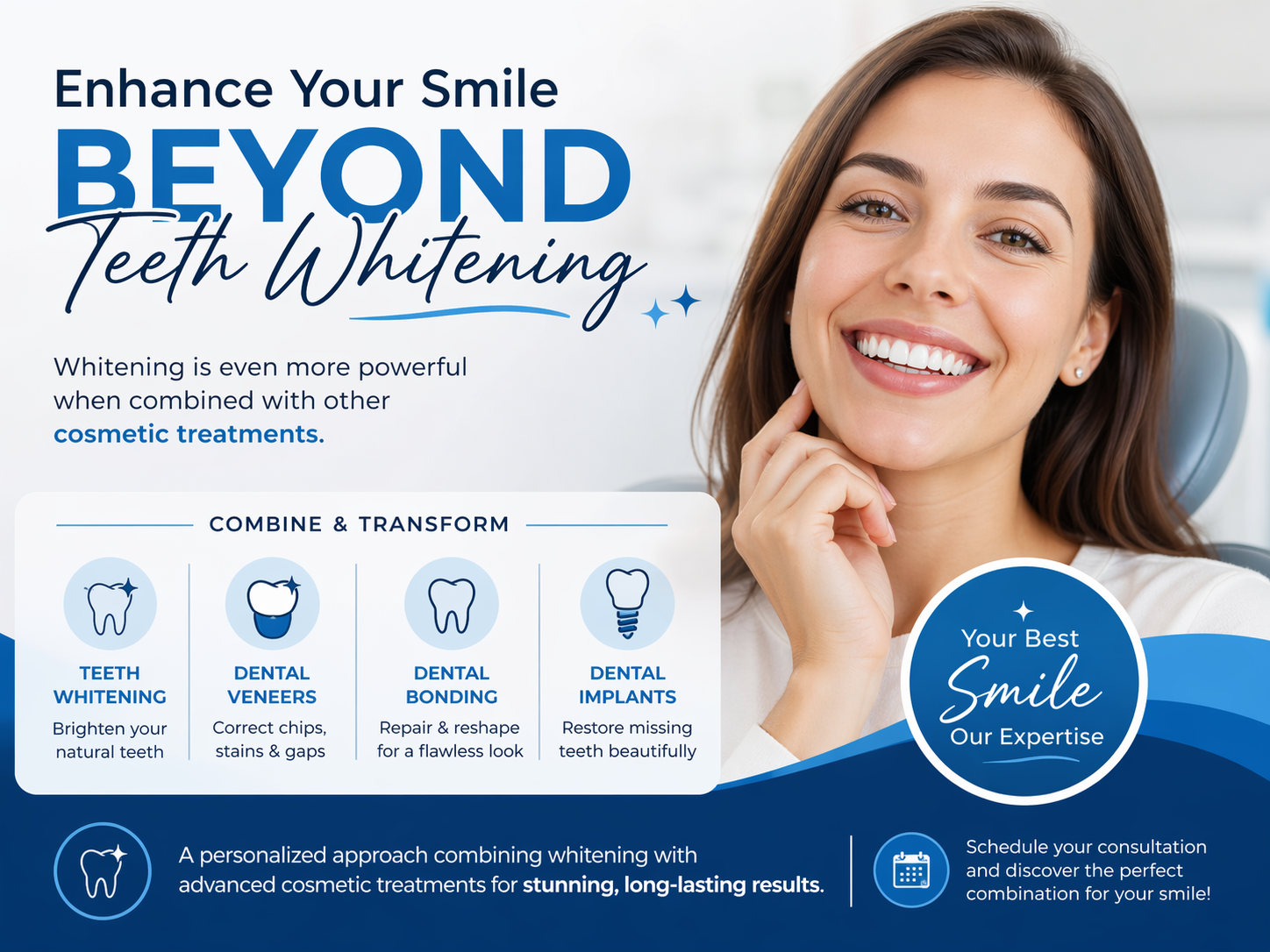
Teeth whitening rarely needs to stand alone. Many patients combine it with other smile-enhancing procedures for a more complete transformation. Some popular pairings include:
- Whitening + Invisalign: Straighten your teeth first, then brighten them. The result is a truly transformed smile. Learn more about the before and after results of orthodontic treatment to understand the kind of change that’s possible.
- Whitening + Dental Bonding: Bonding can fix chips or gaps, and if done after whitening, your dentist can match the composite resin to your new, brighter shade.
- Whitening + Dental Bridges: If you have a dental bridge that has darkened over time, whitening your natural teeth before replacement can ensure a closer color match with your new restoration.
- Whitening + Implants: If you’re planning on getting a dental implant crown shade-matched to your natural teeth — a future content topic — whitening first gives your dentist a brighter baseline to work from.
Caring for Your Smile After Whitening: Quick Tips
Once your treatment is done, a few simple habits can dramatically extend your results:
- Use a soft-bristle toothbrush and non-abrasive fluoride toothpaste
- Rinse with water immediately after consuming staining beverages
- Drink dark liquids through a straw to minimize enamel contact
- Avoid tobacco in all forms
- Schedule your routine teeth whitening touch-up appointments — a future content topic — every 12–18 months
- Follow your dentist’s post-whitening dietary guidelines for the first 72 hours
Your dental team is your best resource for personalized maintenance advice. If you have any questions after treatment — sensitivity, uneven results, or anything else — don’t hesitate to reach out to your provider.
Thinking about other ways to protect your smile long-term? Understanding the stages of gum disease and catching problems early goes hand-in-hand with keeping your smile looking its absolute best.
The Bottom Line
Teeth whitening delivers some of the most visible, immediate results of any cosmetic dental treatment. With professional in-office whitening, most patients see a dramatic difference in a single appointment — and with proper care, those results can last one to three years. The key is combining a quality treatment with smart daily habits and regular dental visits.
If you’ve been curious about brightening your smile with a professional whitening treatment, the first step is a simple consultation. Your dentist will assess your teeth, explain the options that fit your goals, and help you decide on the approach that makes the most sense for you.
A whiter smile isn’t just about aesthetics — it’s about feeling more confident every time you walk into a room. And that’s something worth smiling about.
Ready to Transform Your Smile?
Professional teeth whitening at Pinnacle Dental is safe, fast, and effective. Whether you’re looking to brighten your smile or need help from an emergency dentist in Plano, our experienced team is here to help. Book a consultation today and take the first step toward a brighter, more confident smile.
Frequently Asked Questions
How long do teeth whitening results last?
Results typically last anywhere from 6 months to 3 years, depending on the type of treatment and your day-to-day habits. Professional in-office whitening tends to last the longest — especially when paired with periodic touch-ups and good oral hygiene. Over-the-counter options generally fade within a few months.
What is the difference between in-office and at-home whitening?
In-office whitening uses a professional-strength bleaching gel that is activated by a special light, delivering dramatic results in a single 60–90 minute visit. At-home kits — whether dentist-prescribed or store-bought — use milder concentrations applied over several days or weeks for a more gradual brightening effect.
Does teeth whitening hurt?
Some patients experience temporary tooth sensitivity or mild gum irritation during or after whitening, but this typically resolves within 24–48 hours. A dentist can apply desensitizing agents before or after treatment to minimize discomfort. Patients with pre-existing sensitivity should discuss this with their provider beforehand.
How many shades whiter can I expect my teeth to be?
Most patients achieve 3 to 8 shades of improvement with professional whitening. The exact result depends on the original shade of your teeth, the type of staining present, and the treatment used. Surface stains from food and beverages respond the most dramatically.
Can whitening toothpaste replace professional treatment?
Whitening toothpastes are great for removing surface buildup and maintaining brightness between professional treatments, but they cannot change the intrinsic color of your teeth. Only bleaching agents penetrate enamel deeply enough to produce meaningful shade changes. Think of whitening toothpaste as maintenance, not transformation.
Is teeth whitening safe for sensitive teeth?
Whitening can be performed on sensitive teeth with the right precautions. A professional dentist will evaluate your enamel and gum health beforehand and may recommend a lower-concentration formula, shorter treatment times, or desensitizing treatment. It’s always safest to have whitening done or supervised by a dental professional if you have sensitivity concerns.
Does teeth whitening work on crowns, veneers, or bonding?
No — whitening agents only work on natural tooth enamel. Dental restorations like crowns, veneers, and bonded teeth will not change color with bleaching treatments. If you have visible restorations in your smile zone, your dentist can discuss timing and coordination so that everything looks consistent after whitening.