
If your teenager needs orthodontic treatment, the choice between Invisalign for teens and traditional metal braces can feel overwhelming. This guide breaks down the key differences — from comfort and cost to compliance and results — so you can make the most informed decision for your child.
Why Orthodontic Treatment Matters for Teenagers
The teenage years are one of the best times to address teeth alignment. Crooked teeth, overcrowding, and bite issues don’t just affect how your teen looks — they can impact chewing, speech, and long-term oral health. Getting treatment during adolescence is often ideal because the jaw is still developing, which can make the process faster and more effective.
At our Plano location, Pinnacle Dental’s team collaborates with both teens and parents to determine the ideal orthodontic option that matches their smile aspirations and lifestyle. We typically focus on teen Invisalign and traditional metal braces.
What Is Teen Invisalign?
Invisalign for teens is a customized series of clear, removable aligners designed specifically for adolescents. Unlike standard Invisalign, the teen version includes features that make it more suitable for younger patients.
- Compliance indicators: Small blue dots on each aligner fade with wear, helping parents and dentists verify the aligners are being used consistently.
- Eruption tabs: These small spaces accommodate teeth that haven’t fully come in yet — common in teens who still have some developing to do.
- Replacement aligners: Invisalign Teen typically includes free replacement aligners for those that get lost or accidentally thrown out.
The aligners are worn for 20 to 22 hours per day and swapped out every one to two weeks as teeth gradually shift into position.
NOTE: Pinnacle Dental is a certified Invisalign provider serving Plano. To learn more about the treatment process, visit our dedicated Invisalign pages.
What Are Traditional Metal Braces?
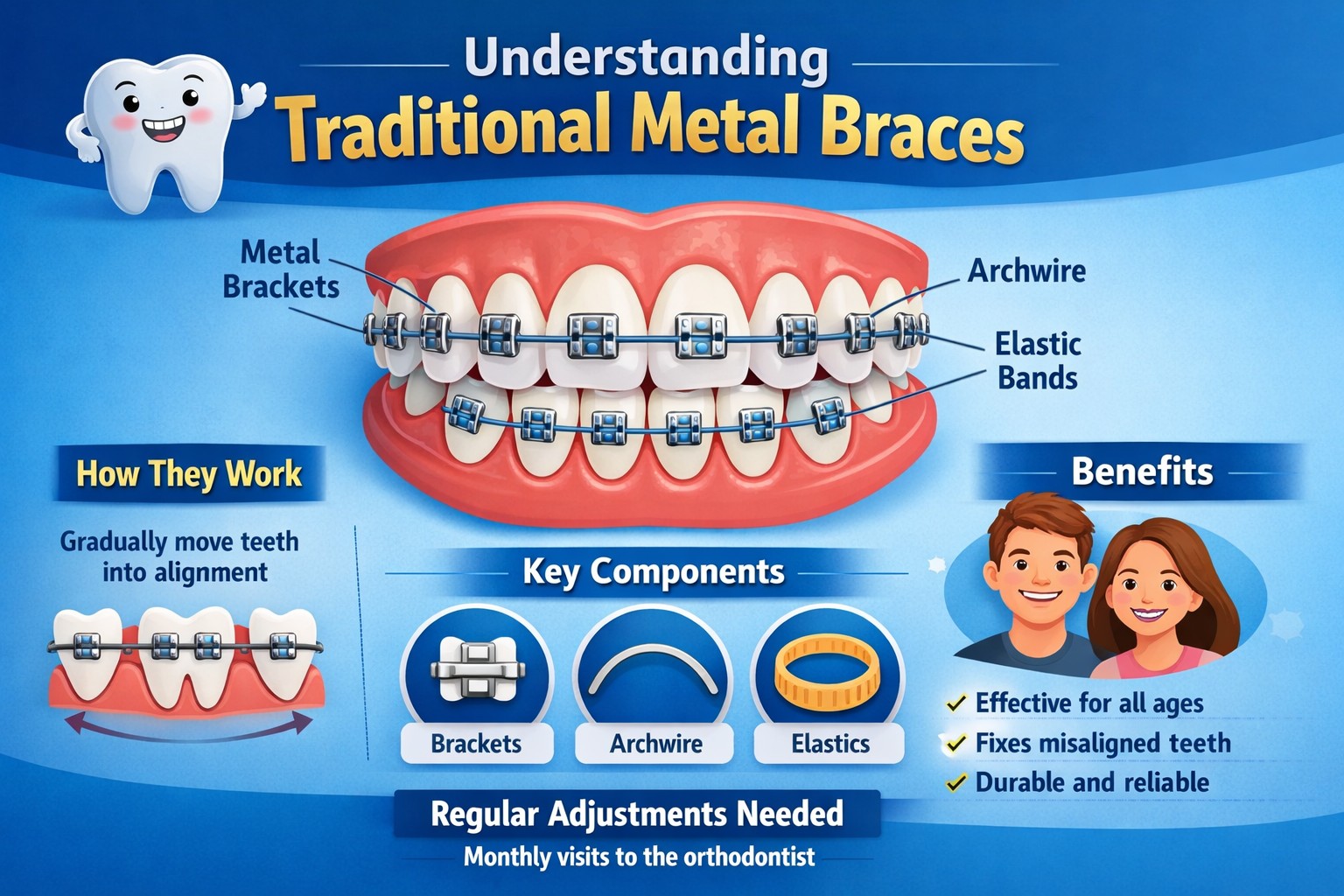
Metal braces are the time-tested orthodontic option that most parents grew up with. They consist of metal brackets bonded to each tooth and connected by a wire that is periodically tightened to move teeth into alignment.
Modern metal braces are smaller and more comfortable than older versions, but they are still visible and carry certain dietary and hygiene restrictions. Despite that, they remain a highly effective treatment option for a wide range of cases — including complex bite corrections.
Teen Invisalign vs Metal Braces: A Side-by-Side Comparison
1. Appearance
This is often the first thing teens care about. Invisalign aligners are virtually invisible, making them far more discreet than metal braces. For teens who are self-conscious during treatment, clear aligners can make a meaningful difference. Metal braces are more noticeable, but many teens enjoy customizing their rubber band colors.
2. Comfort
Both options can cause some discomfort as teeth begin to move, but Invisalign tends to be gentler because there are no brackets or wires to irritate soft tissue inside the mouth. Metal braces may cause soreness after adjustments or small cuts from wire ends.
3. Eating & Diet
Invisalign wins here — aligners are removed before every meal, so your teen can continue eating all their favorite foods without restriction. With metal braces, sticky, crunchy, and hard foods are off-limits to avoid breaking brackets or bending wires.
4. Oral Hygiene
Maintaining good oral hygiene is much easier with Invisalign. Teens simply remove the aligners to brush and floss as normal. With braces, food can get trapped around brackets and wires, increasing the risk of cavities and gum issues if good habits aren’t maintained. This is a great reason to combine orthodontic treatment with regular family dental check-ups.
5. Treatment Duration
Treatment time varies by case complexity. In general, Invisalign and metal braces take comparable time — typically 12 to 24 months for most teens. Your dentist can give a more specific estimate after an evaluation.
6. Discipline & Compliance
This is one area where metal braces may have an advantage. Since braces are fixed, there’s no temptation to leave them out. Invisalign’s success depends on your teen wearing aligners for the recommended 20–22 hours daily. If compliance is a concern, braces may offer more reliable results.
7. Cost
Costs vary based on location, case complexity, and your provider. In general, Invisalign for teens tends to be slightly more expensive than metal braces. However, many dental practices — including Pinnacle Dental — offer payment plans and work with PPO insurance to help families manage the investment.
Which Option Is Right for Your Teen?
Every teen is different, and the right choice depends on their orthodontic needs, lifestyle, and maturity level. Here’s a quick way to think about it:
- Choose Invisalign if: Your teen is self-conscious about appearance, is responsible enough to wear aligners consistently, or plays sports or a musical instrument where braces could be uncomfortable.
- Choose metal braces if: Your teen’s case is more complex, compliance might be an issue, or you’re looking for a more budget-conscious starting point.
- Ask your dentist: For complex bite issues like severe overcrowding, underbites, or crossbites, your dentist will advise on which treatment can deliver the best outcome.
Tips for Parents Supporting Their Teen Through Orthodontic Treatment
Whichever option you choose, parental involvement makes a significant difference in the outcome. Here are some practical tips:
- Check in regularly — especially in the first few weeks — to make sure aligners are being worn or braces are being properly maintained.
- Help your teen build a consistent cleaning routine. Good brushing and flossing habits are essential during treatment.
- Watch for signs of discomfort or broken hardware, and contact your dental provider promptly.
- Keep all scheduled appointments. Skipping check-ups can delay progress significantly.
- Consider pairing treatment with a cosmetic dentistry consultation for a full smile transformation once orthodontic treatment is complete.
Ready to Start Your Teen’s Smile Journey?
Whether you’re leaning toward Invisalign or traditional braces, the most important first step is a professional evaluation. At Pinnacle Dental, our experienced team provides personalized consultations to help you and your teen find the best path forward.
We have convenient locations in Plano— with flexible scheduling and a welcoming environment that puts teens at ease. Contact us today to book a consultation, or call us directly:
Frequently Asked Questions (FAQs)
Q: Is Invisalign as effective as metal braces for teens?
Yes — for most cases, Invisalign is just as effective as metal braces. However, very complex orthodontic issues may be better suited to braces. Your dentist will assess your teen’s needs and recommend the most effective approach. Learn more on our Invisalign Plano page.
Q: Can teens play sports with Invisalign?
Absolutely. One major advantage of Invisalign for teens is that the aligners can be removed during contact sports. Your teen can wear a mouthguard without interference — making clear aligners a popular choice among student athletes.
Q: What happens if a teen loses an Invisalign aligner?
Invisalign Teen comes with free replacement aligners, which is a built-in safeguard for the inevitable moments of forgetfulness. Simply contact your dental office and they’ll arrange a replacement promptly.
Q: At what age can a teen start Invisalign?
Most teens are eligible once their permanent teeth have come in, usually around age 12 to 13. A dental evaluation will confirm readiness. Younger children may be candidates for Invisalign First, a separate program designed for early treatment.
Q: How often do teens need to visit the dentist during Invisalign treatment?
Check-ups are typically scheduled every 6 to 8 weeks. These visits allow the dentist to monitor progress and provide the next set of aligners. Pinnacle Dental serves patients across Plano, and surrounding areas.
Q: Does insurance cover Teen Invisalign or metal braces?
Many PPO dental insurance plans include orthodontic benefits that apply to both Invisalign and metal braces. Coverage varies, so it’s best to confirm with your insurance provider and dental office. Pinnacle Dental works with most major PPO plans.